
There’s nothing quite like the warm embrace of a delicious bowl of pho, especially when it’s a comforting Vegan Pho that bursts with flavors. The other evening, a friend invited me over and greeted me with an enticing aroma that filled her kitchen, drawing me in like a siren’s call. She had crafted a plant-based version of the classic Vietnamese soup, rich with spices and vibrant greens. With star anise, cloves, and cinnamon dancing together in a fragrant broth, I was immediately hooked.
This Vegan Pho is more than just a meal; it’s a nourishing experience that balances umami flavors with zesty lime and fresh jalapeños. Perfect for cozy dinners or impressing guests with a sophisticated yet simple dish, every bite invites you to appreciate the art of home cooking. Plus, with the versatility to swap in your favorite veggies or proteins, this recipe promises to be a standout in your kitchen repertoire. Let’s dive into creating this aromatic gem that embraces comfort without compromising on flavor!

Why is Vegan Pho a Must-Try?
Comforting Warmth: This Vegan Pho wraps you in a cozy embrace, perfect for chilly evenings or nurturing your soul.
Aromatic Bliss: The rich broth, infused with star anise and cinnamon, elevates your dining experience to new heights.
Nourishing Ingredients: Packed with fresh greens and plant-based protein, this soup is as wholesome as it is delightful.
Endless Customization: Feel free to swap in your favorite vegetables or proteins, ensuring this dish always suits your taste.
Quick and Easy: With simple steps, you’ll have a gourmet meal on the table in no time, making it an ideal recipe for busy weeknights.
Vegan Pho Ingredients
For the Broth
• White onion – Adds sweetness and depth to the broth. Substitution: Yellow onion can be used if unavailable.
• Fresh ginger – Provides warmth and spice. Note: Halve lengthwise for better char.
• Star anise – Imparts a sweet, licorice-like flavor essential to Pho. Note: Use sparingly due to strong flavor.
• Whole cloves – Adds a warm and aromatic note. Substitution: Use allspice for a similar flavor.
• Cinnamon sticks – Offers sweetness and warmth. Note: Ground cinnamon can be used in a pinch, but whole sticks are preferred for infusion.
• Coriander seeds – Contributes citrusy notes that enhance the broth. Substitution: Ground coriander may be used; adjust quantity.
• Fennel seeds – Adds a hint of sweetness and anise flavor. Note: Omit for a less sweet profile.
• Water – The base for the broth. Ensure it’s filtered for the best flavor.
• Shiitake mushroom stems – Imparts umami flavor to the broth. Note: Fresh or dried shiitake mushrooms can be used for a deep flavor.
• Kombu – Enhances umami in broth. Substitution: Wakame can be used if kombu is unavailable.
• Tamari – Gluten-free soy sauce for umami depth. Substitution: Coconut aminos for a soy-free alternative.
For the Soup
• Avocado oil – For sautéing vegetables; provides healthy fats. Substitution: Any neutral oil may work.
• Shiitake mushrooms – Adds meaty texture and umami flavor. Substitution: Use cremini mushrooms for a different texture.
• Sea salt – Enhances all flavors. Adjust to taste.
• Baby bok choy – Adds freshness and crunch. Note: Regular bok choy or Swiss chard can substitute.
• Rice vinegar – Balances flavors with acidity. Substitution: Apple cider vinegar can be used.
• Rice noodles – Traditional noodle base; absorbs the broth flavor. Substitution: Glass or wheat noodles can be made as alternatives; follow cooking instructions to ensure proper texture.
• Baked tofu – A source of plant-based protein. Substitution: Firm tempeh or additional mushrooms can be used for protein.
• Mung bean sprouts – Optional for crunch and freshness. Note: Can omit if unavailable.
• Jalapeños – For spice and brightness. Adjust quantity to preference for heat.
• Fresh basil or Thai basil – Provides aromatic herbal notes. Note: Use mint as an alternative for a different flavor profile.
• Fresh cilantro – Adds brightness to the dish. Substitution: Green onions for a mild flavor.
• Lime wedges – Essential for a fresh, zesty finish.
• Sriracha or chili oil – Optional for added heat. Adjust amount to taste.
Dive into this bowl of Vegan Pho and savor the delightful medley of flavors that every ingredient brings!
How to Make Vegan Pho
-
Broil the Aromatics: Preheat your oven broiler to high and line a baking sheet with foil. Place the white onion and fresh ginger on the sheet and broil for 10-20 minutes, turning occasionally until charred. Remove the ginger once done.
-
Toast the Spices: In a large pot over medium heat, add the star anise, cloves, cinnamon sticks, coriander seeds, and fennel seeds. Toast these spices for about 3 minutes until they become fragrant and aromatic.
-
Simmer the Broth: Add filtered water, the charred onion, ginger, shiitake mushroom stems, kombu, and tamari to the pot. Bring the mixture to a gentle simmer, allowing it to cook for 30 minutes to develop deep flavors.
-
Strain the Broth: Carefully strain the broth through a fine mesh strainer into a heatproof bowl, discarding the solid spices and vegetable remnants for a clear, rich broth.
-
Sauté the Mushrooms: In a skillet over high heat, add avocado oil and sauté the shiitake mushrooms with a pinch of sea salt for about 4 minutes until they turn golden brown and tender.
-
Cook the Bok Choy: Place the bok choy cut side down in the skillet with the mushrooms. Cook for 1 minute, then add rice vinegar and cover. Reduce the heat to medium and cook for an additional 5-7 minutes until tender.
-
Prepare the Noodles: Cook the rice noodles according to the package instructions. Once ready, divide them among serving bowls, creating a base for your Vegan Pho.
-
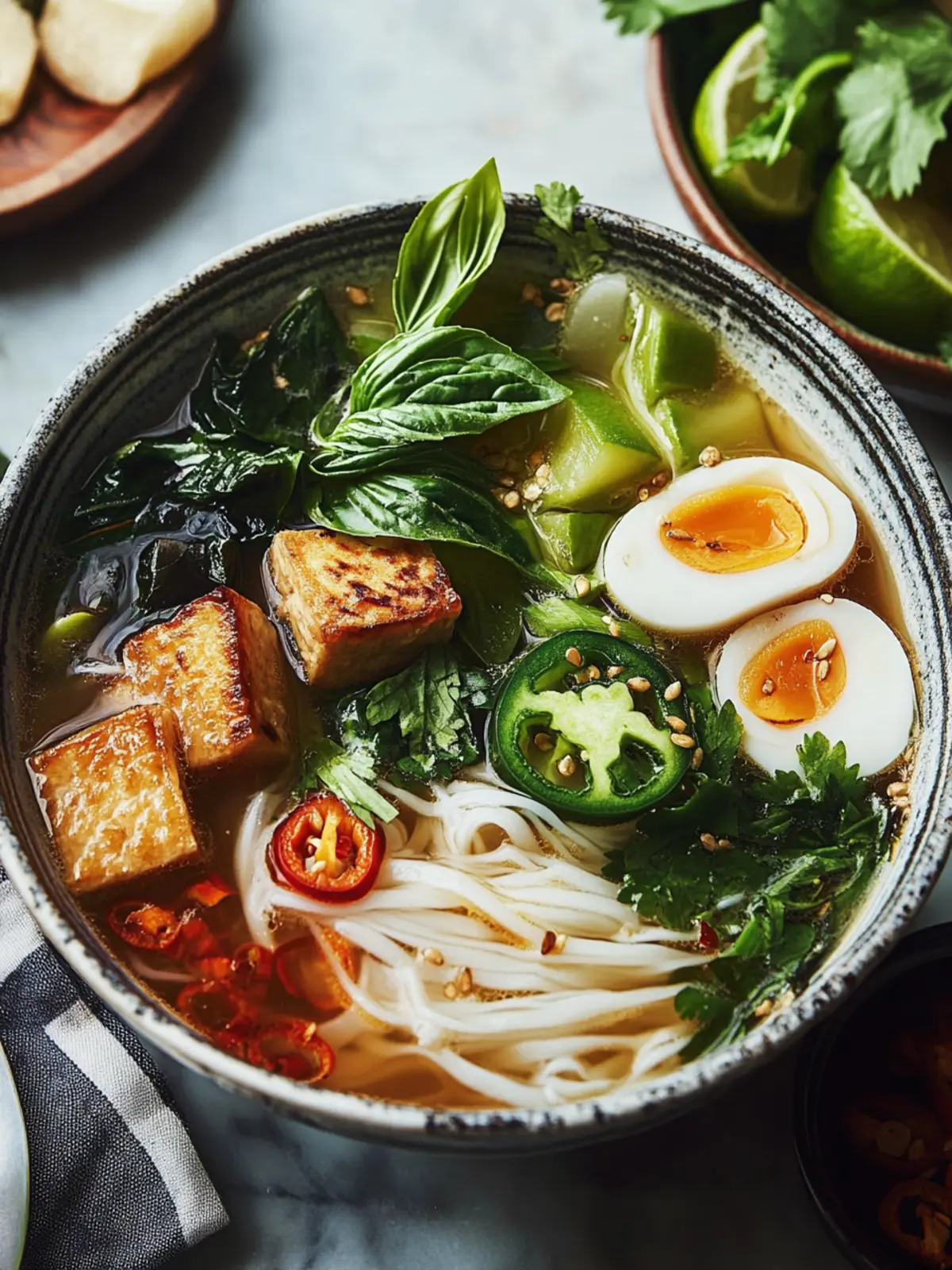
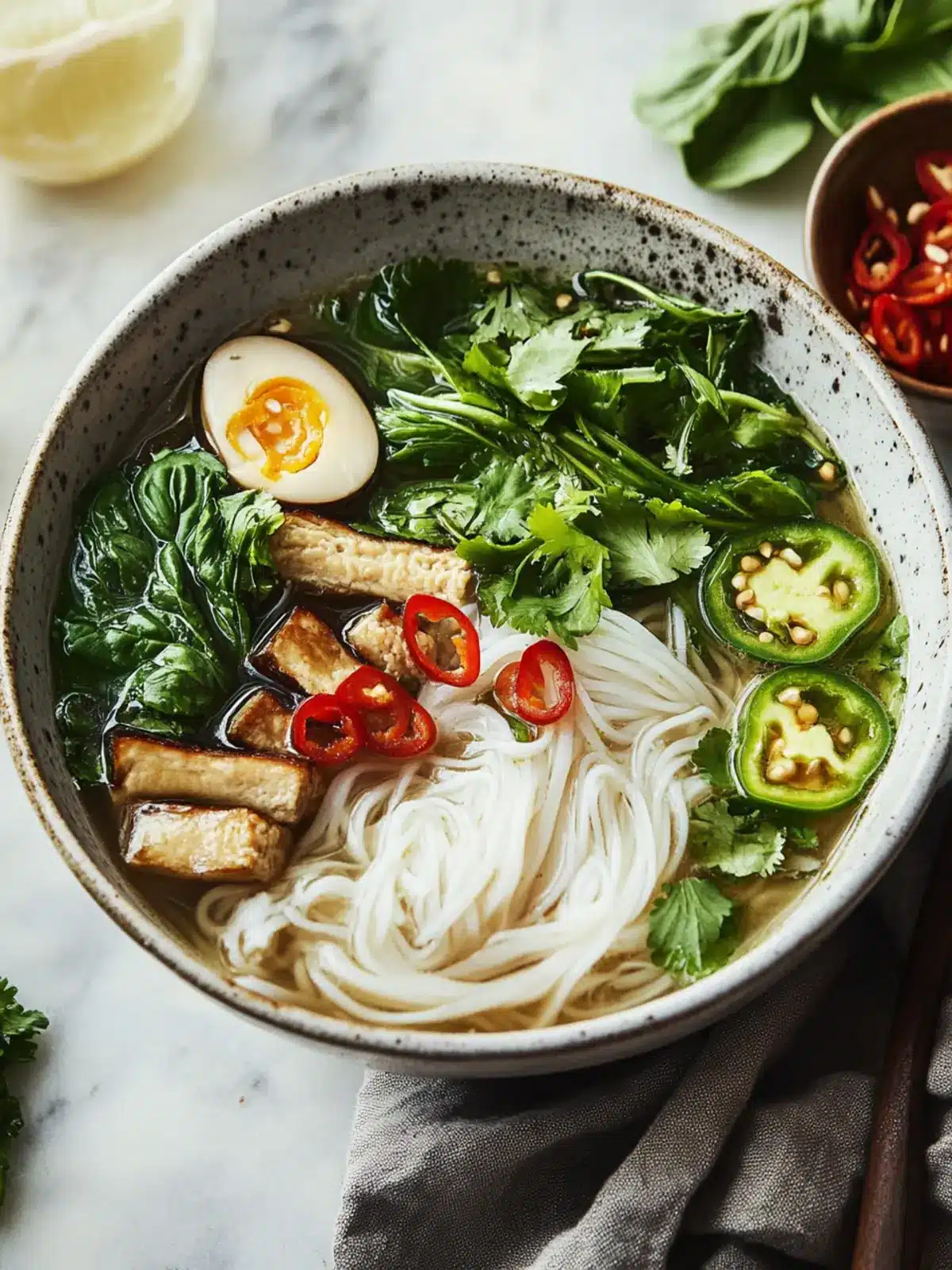
Assemble the Bowl: Top each bowl of noodles with sautéed mushrooms, bok choy, and pieces of baked tofu. Ladle the hot broth over the top, filling the bowls generously.
-
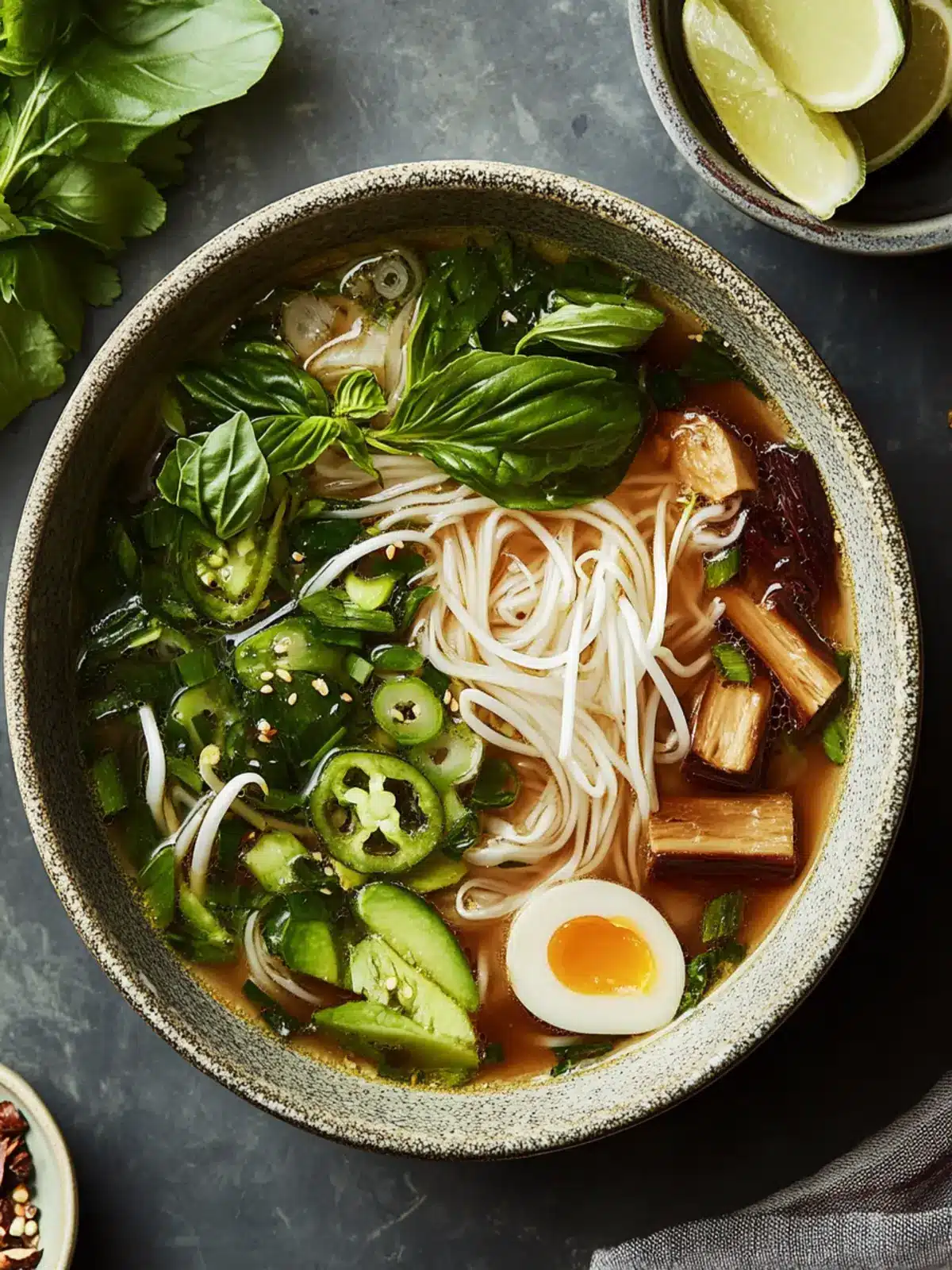
Finish with Garnishes: Finally, garnish your Vegan Pho with mung bean sprouts, sliced jalapeños, fresh basil, cilantro, and serve alongside lime wedges, sriracha, or additional tamari for those who love a little extra heat.
Optional: For added crunch, sprinkle some toasted sesame seeds on top.
Exact quantities are listed in the recipe card below.
What to Serve with Vegan Pho?
Cozy up to a delightful array of accompaniments that will elevate your Vegan Pho experience!
-
Crispy Spring Rolls: A delightful crunch that complements the warm broth; these rolls add an exciting texture and flavor contrast.
-
Asian Cucumber Salad: Refreshing and tangy, this salad brings a cool touch that balances the warm, aromatic soup beautifully. The crisp cucumbers and sweet dressing perfectly complement the pho.
-
Jasmine Rice: Fluffy and fragrant, jasmine rice soaks up the broth nicely. It creates a satisfying base that pairs harmoniously with the vibrant flavors of your pho.
-
Spicy Chili Oil: A drizzle of this oil adds a kick of heat, enriching the overall flavor profile. Perfect for those who enjoy a little extra spice!
-
Mango Sticky Rice: For dessert, this sweet treat offers a luscious finish to your meal, with its creamy coconut flavor and chewy texture providing a delightful counterpoint to the savory broth.
-
Herbal Mint Tea: A soothing drink that complements the aromatic qualities of the pho; this tea refreshes your palate between bites and offers a peaceful moment to savor the meal.
Enjoy these pairings to create a delightful and complete dining experience!
Vegan Pho Variations
Explore delightful twists to make this Vegan Pho truly your own!
-
Spicy Kick: Add a splash of chili oil or more jalapeños to elevate the heat and awaken your taste buds.
-
Herb Bliss: Swap in fresh mint alongside basil for a refreshing twist that brightens every spoonful.
-
Broth Boost: Infuse the broth with a splash of apple cider vinegar for an extra zing that balances flavors beautifully.
-
Protein Punch: Replace baked tofu with crispy tempeh or seitan for a hearty protein alternative that doesn’t skimp on flavor.
-
Crunchy Texture: Toss in toasted sesame seeds or roasted peanuts as a garnish, enhancing both taste and crunch in every bite.
-
Veggie Variety: Experiment with seasonal vegetables like carrots, zucchini, or snap peas to keep your Vegan Pho vibrant and colorful all year round.
-
Noodle Alternative: Use buckwheat soba noodles instead of rice noodles for a gluten-free option that adds a nutty flavor.
-
Umami Upgrade: Stir in miso paste just before serving for an extra layer of rich, savory flavor that enhances the broth’s depth.
How to Store and Freeze Vegan Pho
Fridge: Store leftover broth in an airtight container for up to 1 week. Keep noodles and fresh toppings separate to maintain their texture.
Freezer: Broth can be frozen in portions for up to 3 months. Use freezer-safe containers, leaving space for expansion.
Reheating: For best results, thaw the broth overnight in the fridge before reheating. Gently warm on the stove, adding fresh noodles and toppings just before serving.
Preparation Tips: When storing, avoid adding fresh herbs and lime until you’re ready to serve your Vegan Pho to keep flavors bright and fresh.
Make Ahead Options
These vibrant bowls of Vegan Pho are perfect for meal prep enthusiasts! You can prepare the aromatic broth up to 1 week in advance. Simply broil the onion and ginger, toast the spices, and let the broth simmer before straining and refrigerating. For extra convenience, sauté your mushrooms and bok choy the day before, storing them in an airtight container; they’ll maintain their delicious flavor for 2-3 days. When you’re ready to serve, just cook the rice noodles and reheat the broth, topping it off with the sautéed vegetables and fresh garnishes. This way, you can enjoy a comforting, homemade Vegan Pho with minimal effort during busy weeknights!
Expert Tips for Vegan Pho
-
Flavor Development: Allow the broth to simmer gently for the full 30 minutes. This step is crucial for achieving a deep and aromatic flavor in your Vegan Pho.
-
Substitutions Made Easy: Don’t hesitate to customize the ingredients! Use whatever vegetables or proteins you have on hand, maintaining the unique essence of vegan pho.
-
Avoid Overcooking: Be careful not to overcook your noodles; they should retain a chewy bite. Follow package instructions closely to get the perfect texture.
-
Straining Matters: For a clearer broth, make sure to strain out all solids thoroughly. This mistake can lead to a cloudy finish that detracts from your dish.
-
Garnish Generously: A variety of fresh herbs and toppings can elevate your Vegan Pho and introduce remarkable textures and flavors to each bowl.
Vegan Pho Recipe FAQs
How do I choose ripe ingredients for my Vegan Pho?
Absolutely! When selecting your vegetables, look for baby bok choy that is crisp and vibrant green, avoiding any yellowing leaves. For mushrooms, choose ones that are firm without dark spots. Fresh ginger should be smooth and firm, not wrinkled.
How should I store leftover Vegan Pho?
Very good question! Store leftover broth in an airtight container in the fridge for up to 1 week. I recommend keeping rice noodles and fresh toppings separately in the fridge to prevent them from getting soggy, ensuring they stay fresh for up to 1-2 days.
Can I freeze my Vegan Pho broth?
Indeed! To freeze your broth, first allow it to cool completely. Pour it into freezer-safe containers, leaving some space at the top for expansion. It should last for up to 3 months. Thaw overnight in the fridge before reheating, and warm it gently on the stove for the best results.
What if my broth turns out cloudy?
Great question! A cloudy broth usually results from not straining thoroughly or letting the ingredients boil instead of simmering. To ensure clarity, strain the broth through a fine mesh strainer after simmering and skip boiling, allowing it to simmer gently for the full 30 minutes for flavor depth while keeping the broth clear.
Are there any dietary considerations for Vegan Pho?
Absolutely! This Vegan Pho is naturally gluten-free when you use tamari and rice noodles. However, if you’re cooking for someone with allergies, always check the labels of your ingredients carefully. For those with soy allergies, coconut aminos can be a great alternative to tamari. Additionally, for pets, remember that some ingredients like onions can be harmful, so keep leftovers away from them.
Hearty Vegan Pho: Comfort in Every Bowl of Flavor
Ingredients
Equipment
Method
- Preheat your oven broiler to high and line a baking sheet with foil. Place the white onion and fresh ginger on the sheet and broil for 10-20 minutes, turning occasionally until charred. Remove the ginger once done.
- In a large pot over medium heat, add the star anise, cloves, cinnamon sticks, coriander seeds, and fennel seeds. Toast these spices for about 3 minutes until they become fragrant and aromatic.
- Add filtered water, the charred onion, ginger, shiitake mushroom stems, kombu, and tamari to the pot. Bring the mixture to a gentle simmer, allowing it to cook for 30 minutes to develop deep flavors.
- Carefully strain the broth through a fine mesh strainer into a heatproof bowl, discarding the solid spices and vegetable remnants for a clear, rich broth.
- In a skillet over high heat, add avocado oil and sauté the shiitake mushrooms with a pinch of sea salt for about 4 minutes until they turn golden brown and tender.
- Place the bok choy cut side down in the skillet with the mushrooms. Cook for 1 minute, then add rice vinegar and cover. Reduce the heat to medium and cook for an additional 5-7 minutes until tender.
- Cook the rice noodles according to the package instructions. Once ready, divide them among serving bowls, creating a base for your Vegan Pho.
- Top each bowl of noodles with sautéed mushrooms, bok choy, and pieces of baked tofu. Ladle the hot broth over the top, filling the bowls generously.
- Finally, garnish your Vegan Pho with mung bean sprouts, sliced jalapeños, fresh basil, cilantro, and serve alongside lime wedges, sriracha, or additional tamari for those who love a little extra heat.