
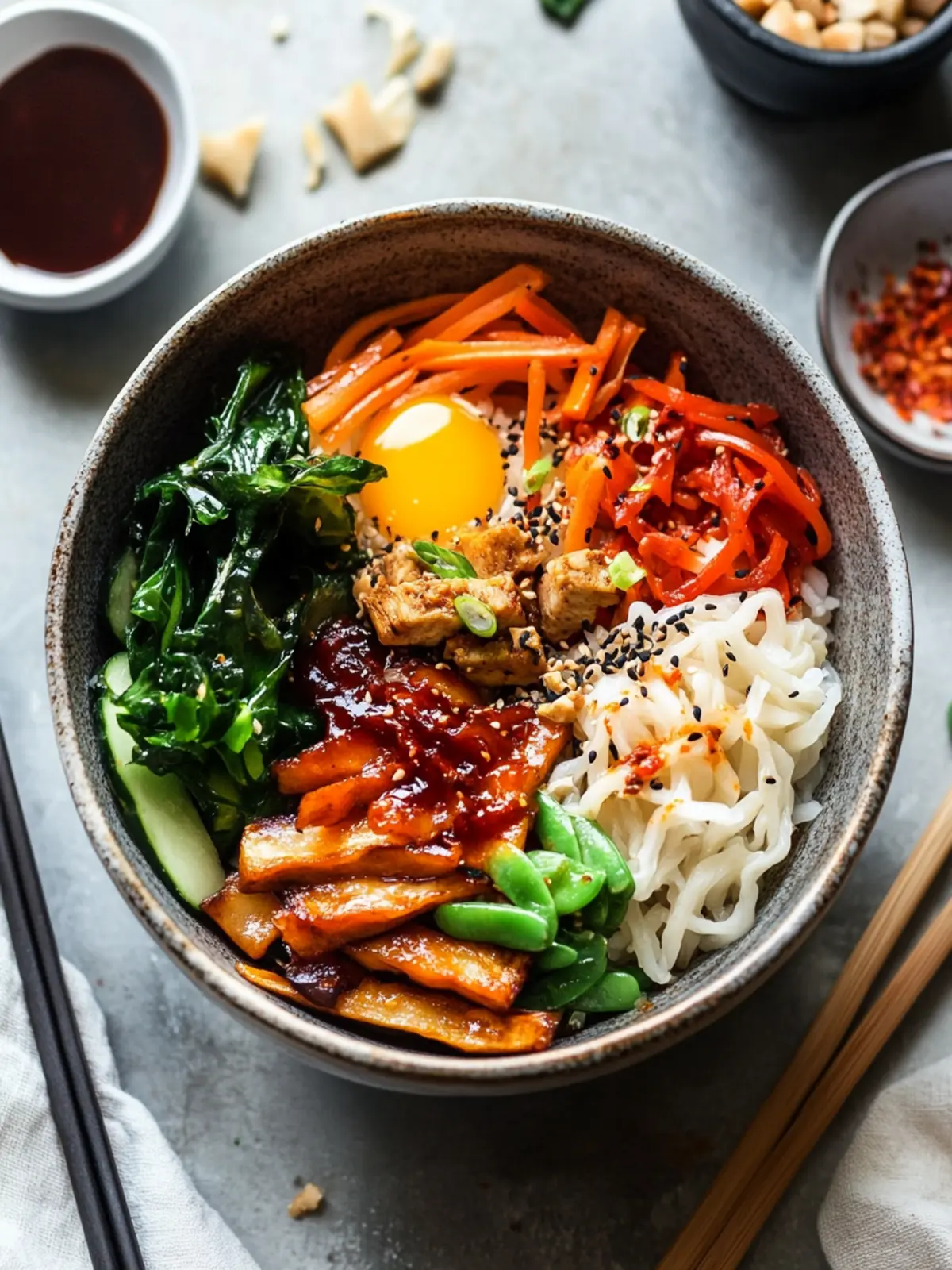
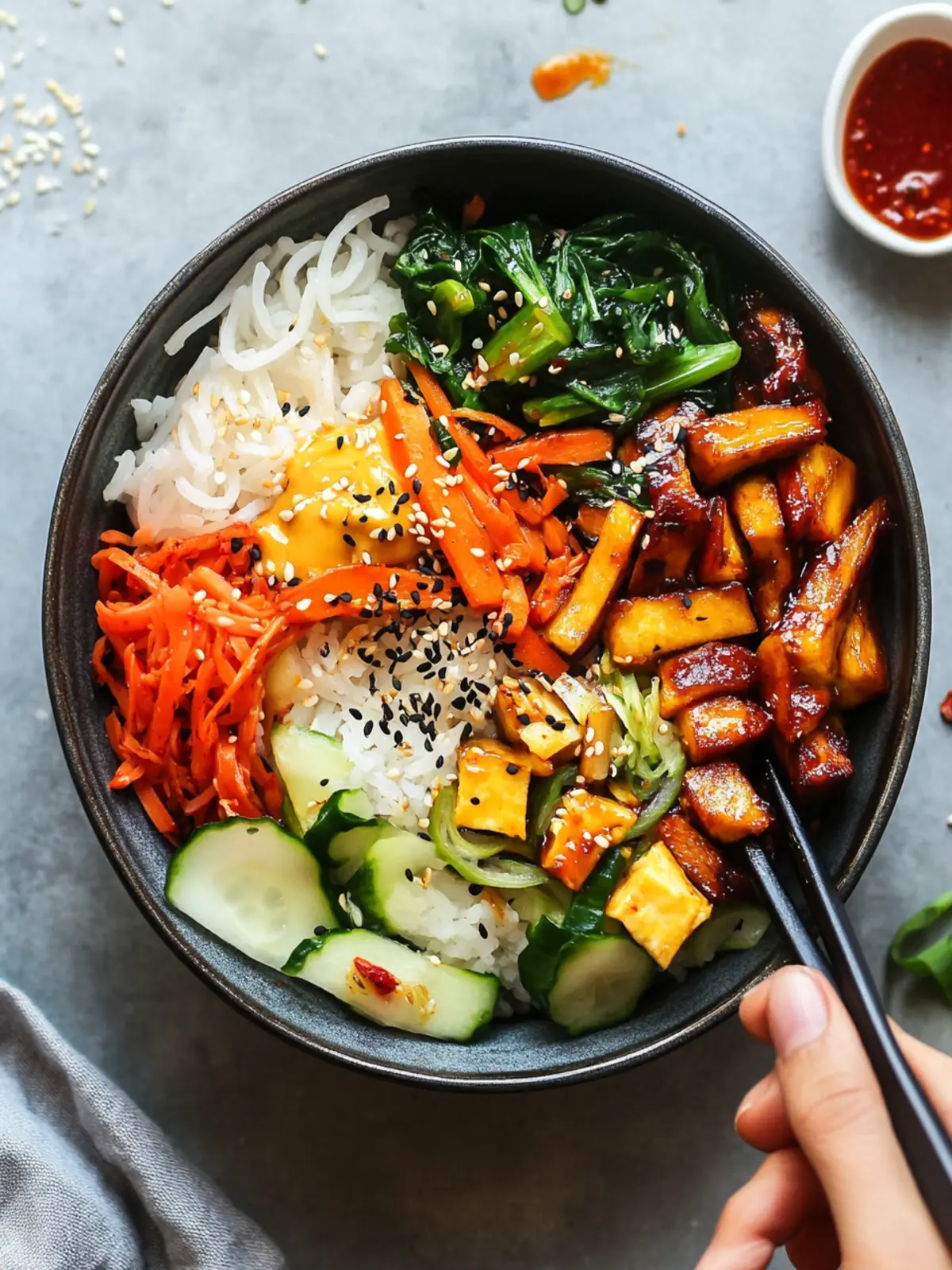
There’s something incredibly delightful about the vibrant colors and fresh aromas wafting from my kitchen when I prepare Vegan Bibimbap. As the sizzle of tofu hitting the pan fills the air, I can’t help but get excited about the gorgeous medley of textures and flavors waiting to be savored. This dish is a celebration of wholesome ingredients—crunchy veggies, nutrient-dense brown rice, and the unmistakable kick of spicy Gochujang sauce.
Whether I’m meal prepping for a busy week ahead or just craving something hearty for dinner, this easy-to-make vegan delight never fails to impress. And the best part? It’s adaptable! You can switch up the veggies based on the season or your mood, creating endless opportunities to keep your taste buds happy. So let’s dive into this colorful bowl of deliciousness, perfect for anyone looking to break free from the monotony of fast food while indulging in a healthy, satisfying meal.

Why is Vegan Bibimbap so Special?
Colorful, Nutrient-Dense Ingredients: With bioactive elements from assorted veggies like carrots and spinach, each bite is a health boost.
Easy to Customize: You can easily switch veggies and proteins to suit your taste or pantry, ensuring it’s never the same dish twice.
Quick Prep Time: Perfect for busy days—this meal can be assembled swiftly while still being delicious and filling.
Rich, Bold Flavor: The spicy Gochujang sauce combined with nutty sesame oil makes a flavor explosion that captivates the palate.
Meal Prep Friendly: Ideal for making in batches to enjoy throughout the week, making your weekdays stress-free.
Visually Stunning: A feast for the eyes, this dish embodies harmony and invites everyone to the table.
Vegan Bibimbap Ingredients
• Create a vibrant and healthy delight!
For the Base
- Brown Rice – A nutrient-dense grain that serves as the filling base of the bibimbap.
For the Protein
- Tofu – A hearty protein source that can be swapped with tempeh or chickpeas for variety.
For the Pickle
- Pickled Daikon – Adds a tangy crunch—prepare a day ahead for maximum flavor infusion.
For the Sauce
- Gochujang Sauce – This spicy and smoky ingredient is essential for flavor depth; feel free to replace with Sriracha if you prefer less heat.
For the Vegetables
- Assorted Vegetables (carrots, spinach, zucchini, mushrooms) – Choose seasonal veggies for a burst of colors and textures.
For Garnishing
- Sesame Oil – Imparts a rich and nutty flavor; can be substituted with different oils for unique taste profiles.
- Maple Syrup – A touch of sweetness to balance the heat of the gochujang; honey or agave are also suitable alternatives.
With these vibrant ingredients, your Vegan Bibimbap will be a true celebration of flavor and health!
How to Make Vegan Bibimbap
-
Prepare the Brown Rice: In a pot, cook the brown rice according to the package instructions until tender and fluffy. This nutrient-rich grain is the perfect base for your bibimbap.
-
Marinate and Cook Tofu: Cube the tofu and marinate it in soy sauce for about 15 minutes. Then, pan-fry in a non-stick skillet over medium heat until golden and crispy, about 10 minutes.
-
Sauté Vegetables: Slice your assorted vegetables—carrots, zucchini, mushrooms, and spinach. In the same skillet, sauté them lightly for about 5 minutes, until they are just tender but still vibrant.
-
Make Pickled Daikon: Thinly slice the daikon radish and marinate it in a mixture of rice vinegar, sugar, and salt. Ideally, do this a day ahead to let those flavors meld and deepen.
-
Prepare Gochujang Sauce: In a small bowl, mix together gochujang, sesame oil, maple syrup, and a bit of water until smooth and creamy. This will add a spicy kick to your bibimbap!
-
Assemble the Bibimbap: In a large bowl, layer the cooked brown rice at the bottom, and then top it off with the sautéed vegetables, crispy tofu, and pickled daikon. Drizzle with the gochujang sauce for that irresistible flavor combination.
-
Final Touch: For the perfect finishing touch, garnish with sesame seeds and fresh herbs if desired. This adds an extra burst of flavor and visual appeal.
Optional: Serve hot and mix all ingredients together before enjoying to blend the flavors well.
Exact quantities are listed in the recipe card below.
What to Serve with Vegan Bibimbap?
Discover the delightful pairings that can elevate your vegan experience into a nourishing feast.
-
Crispy Spring Rolls: These crunchy bites filled with fresh vegetables add a delightful contrast to the warm bibimbap. Perfect for a starter!
-
Sesame Cucumber Salad: The cooling, crunchy cucumber salad with a hint of sesame oil complements the spiciness of the gochujang sauce beautifully.
-
Toasted Seaweed Snacks: Their savory flavor and satisfying crunch will resonate well with the textures of the bibimbap. A fun snack to munch on alongside!
-
Miso Soup: This warm, umami-rich broth serves as a comforting contrast, enhancing the dining experience with layers of flavor.
-
Matcha Green Tea: A light, refreshing drink to cleanse the palate after each flavorful bite of bibimbap. Plus, it’s antioxidant-rich!
-
Fruit Sorbet: End your meal on a sweet note with a sorbet; its fruity flavors provide a refreshing finish that balances the spice.
These accompaniments will perfectly harmonize your dining experience, making your meal feel special and indulgent!
Vegan Bibimbap Variations
Feel free to get creative and customize your Vegan Bibimbap with these delightful twists!
-
Quinoa Base: Swap brown rice for quinoa to add a protein boost and a lovely nutty flavor.
-
Seasonal Veggies: Use fresh, seasonal vegetables like bell peppers, asparagus, or snap peas to keep your dish exciting and vibrant.
-
Spicy Tofu: Marinate your tofu in chili sauce before frying for an extra kick in your protein.
-
Flavorful Broths: Instead of water, cook your rice in vegetable broth for an added depth of flavor that enhances the overall dish.
-
Creamy Avocado: Add diced avocado on top for a rich, creamy texture that perfectly balances the spicy sauce.
-
Nuts & Seeds: Sprinkle some roasted sesame seeds or crushed peanuts for a delightful crunch and an extra layer of flavor.
-
Lentils or Chickpeas: Substitute tofu with lentils or chickpeas for different protein options and flavors, perfect for meal variations.
-
Milder Sauce: If spice isn’t your thing, mix gochujang with a bit of tahini for a creamy and milder sauce alternative.
Expert Tips for Vegan Bibimbap
- Flavor Boost: Let the pickled daikon marinate overnight for a deeper flavor; it elevates the taste of your Vegan Bibimbap significantly.
- Adjust Heat: Tailor the spiciness of your gochujang sauce by adding more or less to suit your preference; this way, everyone can enjoy it comfortably.
- Perfect Crunch: Avoid overcooking your vegetables; aim for a slight crunch to retain their colors and nutrients in the Vegan Bibimbap.
- Batch Prep: Prepare sauces and chop vegetables ahead of time to expedite the cooking process during busy weekdays; stress-free meal prep is a game changer!
- Ingredient Swaps: Feel free to swap the tofu for chickpeas or tempeh for a different protein; flexibility keeps your Vegan Bibimbap exciting and new!
Make Ahead Options
These Easy Vegan Bibimbap components are perfect for busy home cooks looking to save time during the week! You can prepare the brown rice, sautéed vegetables, and gochujang sauce up to 3 days in advance. Store the cooked rice and vegetables separately in airtight containers in the refrigerator to maintain their freshness and texture. Additionally, you can pickle the daikon radish overnight for maximum flavor. When you’re ready to enjoy your vegan bibimbap, simply reheat the brown rice and vegetables, assemble them into a bowl, and top with crispy tofu and the prepared gochujang sauce. This way, you’ll have a wholesome meal ready in just minutes, flavorful and just as delicious!
How to Store and Freeze Vegan Bibimbap
-
Fridge: Store each component of the Vegan Bibimbap separately in airtight containers. They will last up to 3 days while keeping them fresh and tasty.
-
Freezer: If you’ve made extra portions, freeze the cooked brown rice and tofu separately. They can be stored for up to 2 months; just remember to let them cool completely before sealing.
-
Reheating: To reheat, thaw the rice and tofu overnight in the fridge. Warm them gently in a skillet or microwave until heated through. Re-sauté the veggies fresh for a delightful crunch!
-
Pickled Daikon: This can be stored in the fridge for up to a week in its marinade. The longer it sits, the better the flavors develop, making it a fantastic make-ahead option.
Vegan Bibimbap Recipe FAQs
What’s the best way to choose ripe vegetables for Vegan Bibimbap?
Absolutely! When selecting vegetables, look for ones that are vibrant in color and free from blemishes or dark spots. For example, choose carrots that are firm and brightly colored, spinach that is fresh and crisp, and zucchini that is smooth and unblemished. Seasonal produce is best as it tends to be the freshest and most flavorful, enhancing your Vegan Bibimbap experience!
How long can I store leftover Vegan Bibimbap components?
Very! Each component can be stored separately in airtight containers in the fridge for up to 3 days. This keeps your ingredients fresh and tasty. Just remember to reheat the rice and tofu before assembling your Bibimbap again for the best texture!
Can I freeze Vegan Bibimbap? If so, how?
Of course! To freeze, first cool the cooked brown rice and tofu completely before packing them into separate freezer-safe containers. They can be stored for up to 2 months. When you’re ready to enjoy them, thaw the rice and tofu overnight in the fridge and then warm them gently in a skillet or microwave. Fresh sautéed veggies add the perfect crunch when you reassemble your dish.
What should I do if my Gochujang sauce is too spicy?
No worries at all! If your sauce is a bit too fiery, you can dilute it with a little more sesame oil or add a touch of extra maple syrup to balance out the heat. You might even find that mixing in a bit of creamy nut butter can help mellow the spiciness while adding an extra layer of flavor.
Is Vegan Bibimbap suitable for people with certain allergies?
Absolutely! This dish is naturally vegan and can be made gluten-free depending on the type of soy sauce you use. Be sure to choose a gluten-free variety or use tamari. For those with soy allergies, consider swapping the tofu with chickpeas or lentils. Always check for any specific allergens in your ingredients to keep everyone safe.
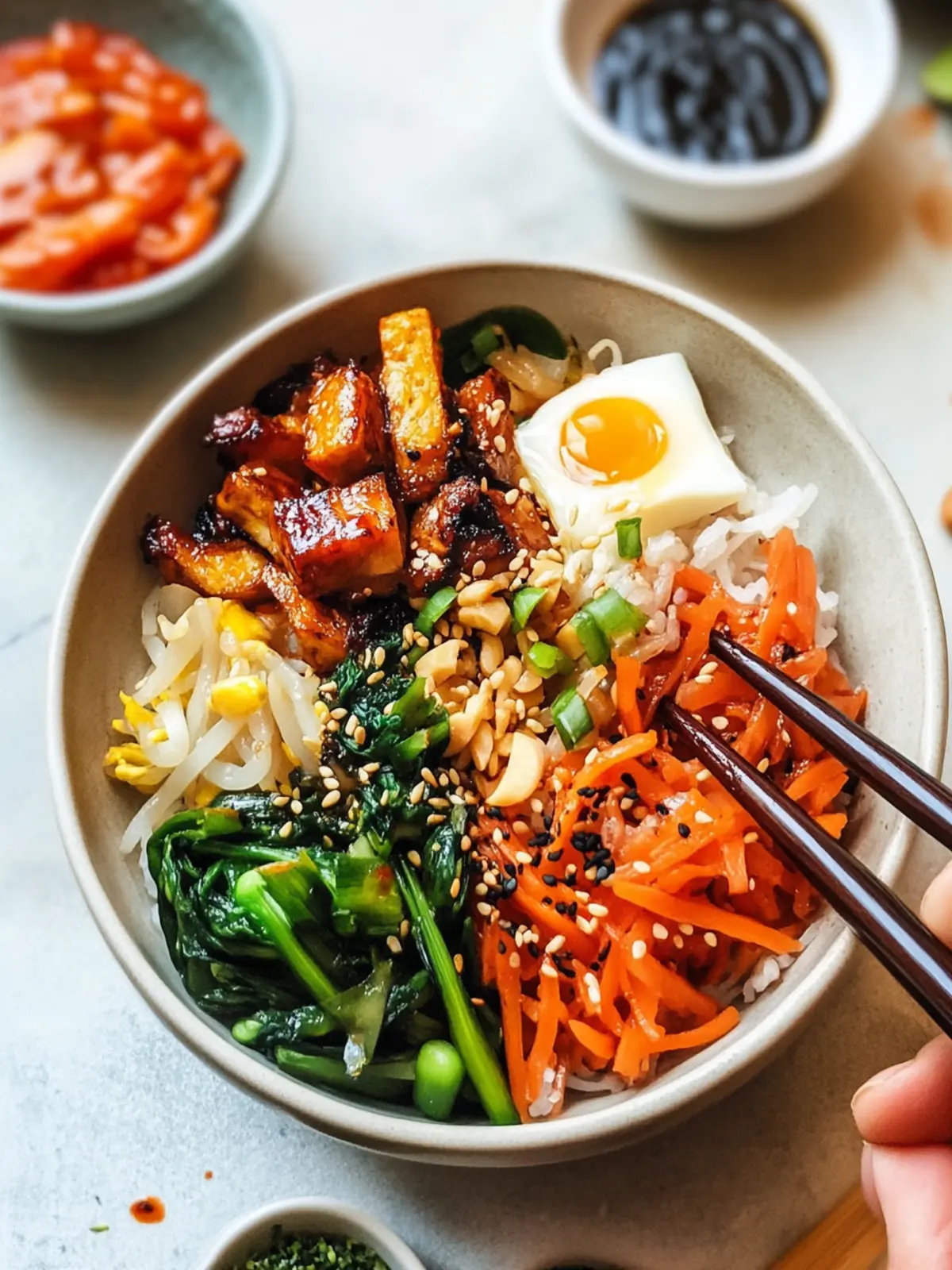
Vegan Bibimbap: A Colorful Bowl of Flavor and Health
Ingredients
Equipment
Method
- Prepare the Brown Rice: In a pot, cook the brown rice according to the package instructions until tender and fluffy.
- Marinate and Cook Tofu: Cube the tofu and marinate it in soy sauce for about 15 minutes. Then, pan-fry until golden and crispy, about 10 minutes.
- Sauté Vegetables: Slice your assorted vegetables. In the same skillet, sauté them lightly for about 5 minutes until tender but still vibrant.
- Make Pickled Daikon: Thinly slice the daikon radish and marinate it in a mixture of rice vinegar, sugar, and salt.
- Prepare Gochujang Sauce: Mix gochujang, sesame oil, maple syrup, and a bit of water in a small bowl until smooth.
- Assemble the Bibimbap: Layer the cooked brown rice, then add sautéed vegetables, crispy tofu, and pickled daikon. Drizzle with gochujang sauce.
- Final Touch: Garnish with sesame seeds and fresh herbs, if desired.