
There’s something incredibly comforting about a warm bowl of miso soup, particularly on a chilly evening. The moment that umami-rich broth enters your mouth, it’s as if you’re wrapped in a cozy blanket of flavor. I discovered this gem of a recipe during my quest for something healthy yet satisfying, and it quickly became my go-to dish for weeknight dinners and special occasions alike.
Miso soup is a canvas for creativity in the kitchen. Whether you prefer the classic version or want to infuse it with vibrant ingredients like shiitake mushrooms, fried tofu, or even clams, the possibilities are endless. This dish is not only a celebration of Japanese culture but also a reminder that simplicity can lead to extraordinary comfort food. So, grab your spoon and prepare to enjoy a delightful experience that’s quick to make and bursting with flavor, perfect for anyone looking to leave fast food behind for something wholesome and homemade!

Why is Miso Soup a Must-Try?
Flavor Explosion: The rich umami in miso soup delivers a satisfying depth that’s hard to resist.
Customizable Dish: Whether you like it vegan or with added protein, toppings like fried tofu and shiitake mushrooms keep it interesting!
Quick and Easy: In under 30 minutes, you can whip up a nutritious meal that’s perfect for busy nights.
Crowd-Pleasing Comfort: Its warm, soothing broth makes it a favorite for family dinners and gatherings.
Healthy Choice: Packed with protein and nutrients, it’s a guilt-free indulgence that rivals any fast food option.
Join the miso soup revolution and elevate your homemade meals with this comforting classic!
Miso Soup Ingredients
For the Dashi
- Kombu (dried kelp) – Essential for making dashi; soak in cold water to extract umami flavor.
- Sake – Adds depth and a hint of sweetness; substitute with rice vinegar for a non-alcoholic option.
- Mirin – A sweet rice wine that enhances flavor; replace with a mix of sugar and water for a non-alcoholic version.
- Katsuobushi (bonito flakes) – Key ingredient for dashi’s rich flavor; swap with dried shiitake mushrooms for a vegan option.
For the Soup
- Wakame (dried seaweed) – Adds texture and nutrition; can be replaced with fresh spinach or kale if preferred.
- Silken Tofu – Provides protein and creaminess; ensure it’s drained well for the best texture.
- Miso (white or red) – The backbone of the soup, giving it its distinctive taste; adjust the amount based on your preference.
- Scallion – For fresh flavor and garnish; can be substituted with chopped chives.
Embrace the comforting art of miso soup, and experiment with delightful variations that bring your meals to life!
How to Make Miso Soup
-
Soak the Kombu: Place the kombu in 4 cups of cold water and let it soak for about 15 minutes. This step is essential for extracting that delicious umami flavor you’ll love.
-
Heat the Dashi: Add sake and mirin to the pot with the soaked kombu. Heat gently until it starts to simmer, then steep the kombu for another 15 minutes to enhance the broth’s richness.
-
Prepare the Wakame: While your dashi is steeping, take a separate bowl and soak the wakame in cold water for about 15 minutes until it’s soft and tender. Drain it well before adding it to your soup later.
-
Strain the Dashi: Carefully remove the kombu from the pot and stir in the katsuobushi. Allow it to steep for 1 minute, then strain the broth through a fine-mesh sieve to get that clear, flavorful dashi.
-
Combine the Ingredients: Return the strained dashi to the pot and add the drained wakame and cubed silken tofu. Bring everything to a gentle boil before removing it from the heat.
-
Add the Miso: In a small bowl, mix the miso with a little hot broth to help dissolve it completely. Stir the mixture back into the soup pot, tasting and adjusting the flavor as needed. Garnish with chopped scallion for that fresh touch.
Optional: Top with a sprinkle of sesame seeds for an extra layer of flavor.
Exact quantities are listed in the recipe card below.

Storage Tips for Miso Soup
Fridge: Store your leftover miso soup in an airtight container for up to 3 days. Make sure it’s completely cooled before sealing to maintain freshness.
Freezer: If you want to save it for later, transfer cooled soup into freezer-safe containers, leaving some space for expansion; it can last up to 2 months.
Reheating: When ready to enjoy, thaw frozen miso soup in the fridge overnight. Reheat gently on the stove, avoiding boiling to preserve the delicate flavors and ingredients.
Miso Addition: If you plan to freeze, consider adding miso just before serving for enhanced flavor, as freezing can dull its taste.
Expert Tips for Miso Soup
-
Perfect Dashi: Always let the kombu steep in cold water and avoid boiling to prevent sliminess. This will ensure a great base for your miso soup.
-
Taste Test: Miso varies in saltiness! Start with a smaller amount and gradually add more, tasting as you go to reach your ideal flavor.
-
Ingredient Variations: Feel free to get creative! Adding shiitake mushrooms or fried tofu enhances the flavor and can make your miso soup even more comforting.
-
Gentle Stirring: When incorporating miso, stir gently to avoid breaking down the silken tofu. This helps maintain a lovely texture throughout.
-
Serve Fresh: Miso soup is best enjoyed fresh, but can be stored in the fridge for up to 3 days. Reheat gently to keep the flavors intact.
Make Ahead Options
Miso soup is perfect for meal prep enthusiasts, allowing you to enjoy a comforting bowl with minimal last-minute effort! You can prepare the dashi up to 24 hours in advance; simply follow the soaking and heating instructions, then store it in the refrigerator. Additionally, soak the wakame and prepare your cubed silken tofu ahead of time—just refrigerate them separately. When you’re ready to enjoy your miso soup, combine the dashi, wakame, and tofu in a pot, gently heat, and stir in the miso. This way, you’ll have a delicious, homemade meal ready to serve in no time, ensuring it remains just as delightful as freshly made!
What to Serve with Miso Soup?
A warm bowl of soup deserves delightful companions that enhance its flavors and create a memorable meal experience.
-
Steamed Rice:
The fluffy texture of steamed rice absorbs the savory broth, making each bite even more satisfying. -
Japanese Pickles (Tsukemono):
These tangy bites add a refreshing crunch, balancing the warmth of the soup with vibrant flavors. -
Fried Tofu:
Adding crispy fried tofu provides a delightful contrast in texture, enriching the dish with protein and crunch. -
Tempura Vegetables:
Lightly battered and fried veggies bring a wonderful crunch and contrast to the comforting soup, elevating your meal. -
Nori Salad:
A salad featuring strips of nori, cucumber, and sesame dressing pairs beautifully, adding a fresh twist to your table. -
Green Tea:
A soothing cup of green tea complements the umami flavors of miso soup, offering a warm and harmonious beverage option. -
Mochi Cake:
Treat yourself with sweet mochi cake for dessert; its chewy texture and sweetness are a blissful end to your meal.
Whether enjoyed alone or shared with delightful sides, miso soup shines as a comforting star on your dining table!
Miso Soup Variations
There are countless ways to make this comforting classic even more delightful and tailored to your taste buds!
-
Vegan Delight: Swap katsuobushi with dried shiitake mushrooms for an umami-packed vegan twist that keeps everyone happy. The earthy flavor from the mushrooms really elevates the soup!
-
Protein Boost: Substitute silken tofu with grilled chicken or clams for a hearty protein fix. This variation makes it a satisfying meal for anyone craving extra richness.
-
Vegetable Medley: Add fresh veggies like bok choy, carrots, or snap peas to enhance flavor and nutrition. Their vibrant colors and textures bring a delightful crunch!
-
Noodle Twist: Include udon or soba noodles for a filling addition that transforms your miso soup into a meal. The noodles soak up the delicious broth, giving every bite a savory embrace.
-
Spicy Touch: If you’re a fan of heat, stir in a dash of chili oil or a sprinkle of red pepper flakes. This spicy addition gives your miso soup an exciting kick!
-
Herb Infusion: Experiment with fresh herbs like cilantro or mint for a refreshing twist. These herbs add a burst of flavor that harmonizes beautifully with the rich broth.
-
Creamy Miso: For a luxurious touch, stir in a splash of coconut milk. It creates a velvety soup with a subtle sweetness that balances the savory notes perfectly.
-
Flavor Fusion: Mix different types of miso (white, red, or even black) to create your own unique taste profile. Each miso brings a different level of depth and sweetness to the soup!
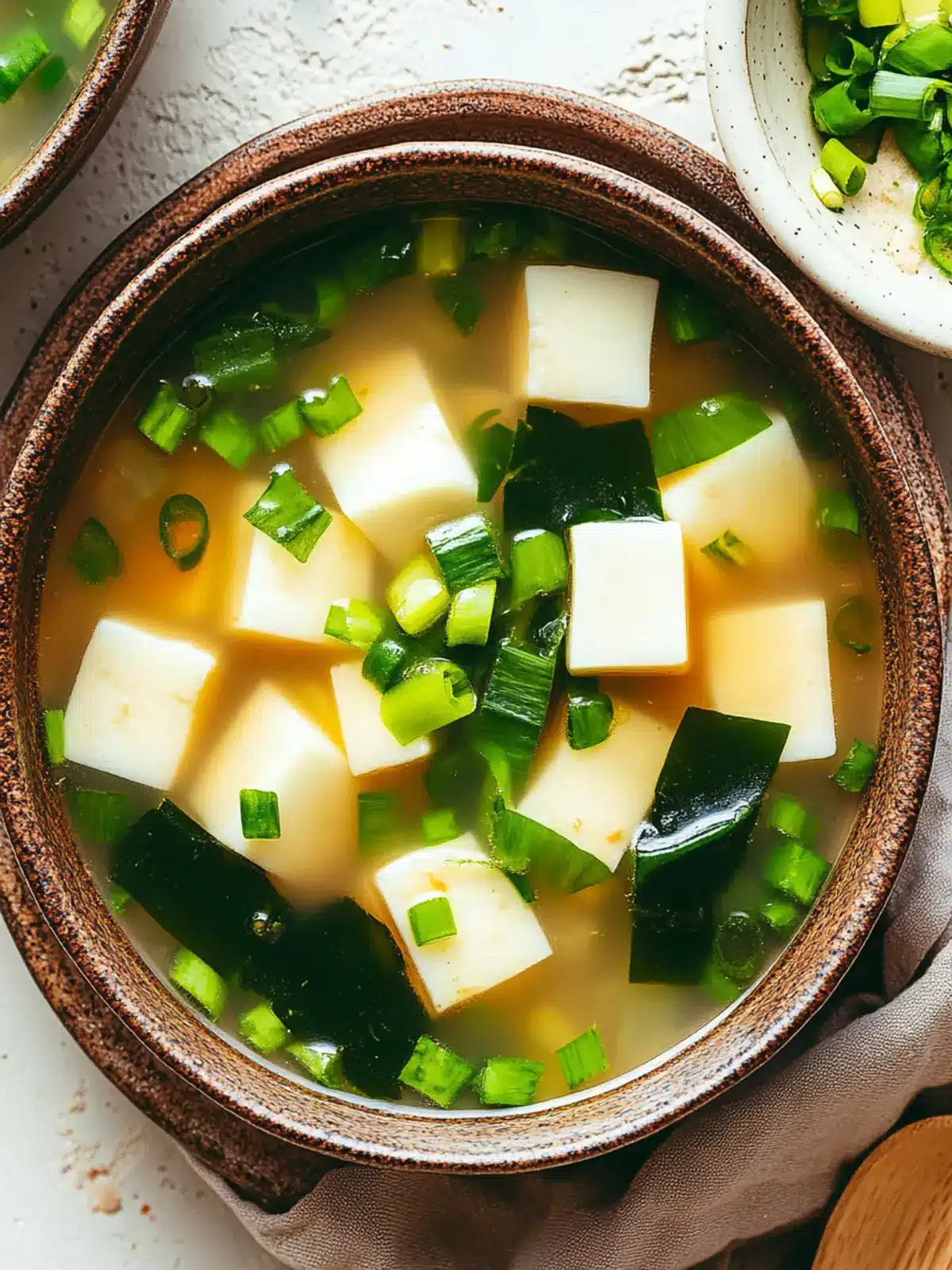
Miso Soup Recipe FAQs
What kind of kombu should I use for my miso soup?
Absolutely! Look for high-quality kombu that is thick and dark green. Avoid kombu with lots of dark spots, as this can indicate it’s past its prime. When you soak it in cold water, pay attention to the aroma; good kombu should have a fresh, briny scent that promises a delicious dashi.
How do I store leftover miso soup?
Very simply! Transfer your leftover miso soup into an airtight container and refrigerate it. It will stay fresh for up to 3 days. Just ensure it’s cooled completely before sealing. Reheating is easy; just warm it gently on the stove. Avoid boiling to keep the wonderful flavors intact.
Can I freeze miso soup?
Yes, you can! To freeze miso soup, cool it completely, then pour it into freezer-safe containers. Leave a little space at the top, as liquids expand when frozen. It can be stored for up to 2 months. When you’re ready to enjoy it, thaw it overnight in the fridge and reheat it gently on the stovetop. If you prefer, add the miso just before serving for peak flavor!
What should I do if my miso soup is too salty?
If your miso soup ends up a bit too salty, fear not! The easiest fix is to add more broth or water to dilute the saltiness. You can also incorporate additional ingredients like silken tofu or veggies to balance it out. Just keep tasting as you go, and you’ll reach that perfect flavor!
Are there any dietary considerations for miso soup?
Certainly! Miso soup is generally gluten-free, but always check the label on your miso paste as some varieties may contain wheat. For a vegan option, ensure you’re using a plant-based dashi (substituting katsuobushi with shiitake mushrooms works beautifully). If you have allergies, take note of ingredients like soy in the miso and other add-ons. Always taste before serving to ensure it’s safe!
How can I enhance the flavor of my miso soup?
For a flavor boost, consider adding ingredients like fresh mushrooms, bok choy, or even a splash of sesame oil just before serving. If you’re feeling adventurous, top your soup with a sprinkle of sesame seeds or thinly sliced chili for a delightful kick. Don’t be shy—experiment until you find your perfect bowl!
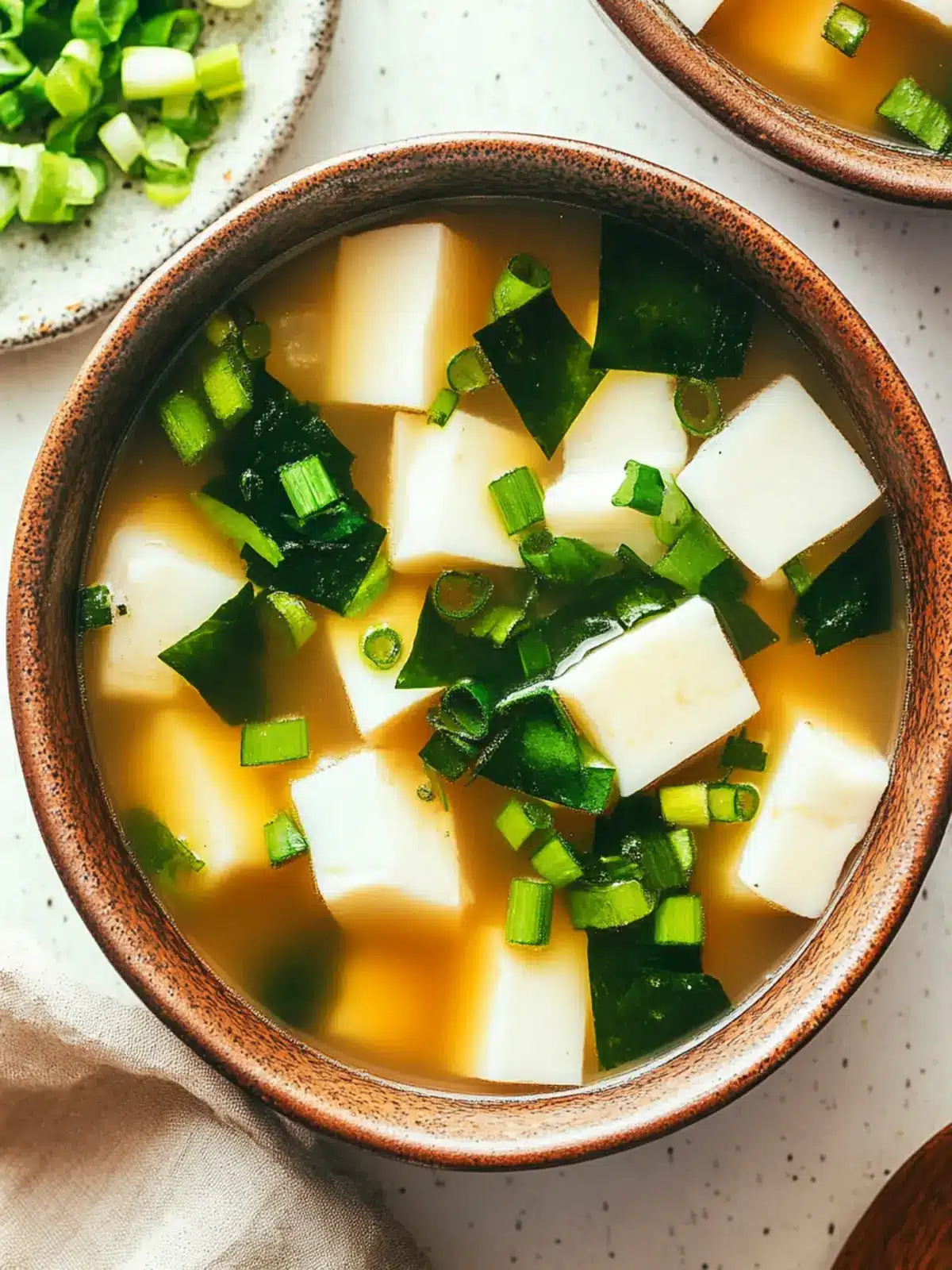
Miso Soup Magic: Comforting Vegan Twist for Every Meal
Ingredients
Equipment
Method
- Soak the Kombu: Place the kombu in 4 cups of cold water and let it soak for about 15 minutes.
- Heat the Dashi: Add sake and mirin to the pot with the soaked kombu, heat gently until it simmers, and steep for an additional 15 minutes.
- Prepare the Wakame: Soak the wakame in cold water for about 15 minutes until soft, then drain.
- Strain the Dashi: Remove the kombu, stir in katsuobushi, steep for 1 minute, and strain through a sieve.
- Combine the Ingredients: Return strained dashi to the pot, add wakame and tofu, bring to a boil, then remove from heat.
- Add the Miso: Mix miso with a little hot broth, stir back into soup, and garnish with chopped scallion.