
Picture this: a warm summer evening, the sun gently setting, and you’re craving something refreshing yet bursting with flavor. That’s when I stumbled upon the delightful world of Kimchi Bibim Guksu, a Korean cold noodle dish that checks all the boxes for a quick and satisfying meal. The vibrant colors of fresh vegetables dance among the chewy noodles, while the spicy, tangy dressing tingles your taste buds with every bite.
What intrigued me most about this dish is its adaptability—you can throw in whatever veggies you have on hand or adjust the spice level to your liking! Whether you’re feeding a crowd or just looking to indulge solo, this dish promises to transport you straight to the bustling streets of Korea in just a few easy steps. Trust me; this recipe will quickly become your go-to for those hot days when you want a taste of summer in a bowl. Let’s dive into this delicious culinary adventure!

Why will you love Kimchi Bibim Guksu?
Unique Flavor Explosion: The combination of spicy gochujang and tangy kimchi creates a vibrant taste experience that will awaken your palate.
Quick and Easy: In just under 30 minutes, you’ll have a satisfying meal fit for any weeknight dinner or summer lunch.
Adaptable: Feel free to swap in your favorite veggies or proteins—this dish is as flexible as your pantry allows!
Chilled Delight: Served cold, it’s the ultimate refreshing dish for hot days, making it a perfect choice for summer gatherings.
Plus, for a deeper dive into Korean culinary traditions, check out this article that further explores the flavors behind Bibim Guksu!
Kimchi Bibim Guksu Ingredients
For the Noodles
• Somyeon or Soba Noodles – The star of the dish; choose thin wheat noodles or buckwheat for a gluten-free twist.
For the Spicy Sauce
• Kimchi – Brings a spicy and sour punch; use homemade or your favorite store-bought variety, or go for pickled veggies to tone down the heat.
• Gochujang – This Korean chili paste adds warmth and depth; adjust the amount for your perfect spice level.
• Rice Vinegar – A splash of acidity balances the flavors; apple cider vinegar works in a pinch.
• Granulated Sugar – This subtle sweetness offsets the spice; feel free to swap with coconut sugar if desired.
• Soy Sauce – Enhances umami richness; choose tamari for a gluten-free alternative.
• Sesame Oil – A drizzle of nuttiness; toasted sesame oil will elevate the flavor even more.
• Garlic – Fresh minced garlic adds aromatic goodness; the more, the merrier!
For the Garnish & Fresh Veggies
• Roasted White Sesame Seeds – A crunchy, flavorful topping; optional but worth it for extra presentation points.
• Salad Greens (e.g., Spinach, Mixed Greens) – Brightens the dish with freshness and color.
• Cucumber and Carrot – Add delightful crunch; julienned for simple mixing.
• Perilla Leaves, Gim, and Soft-Boiled Eggs – Optional toppings that bring more flavor and texture to your Kimchi Bibim Guksu!
This refreshing Kimchi Bibim Guksu is not just a meal; it’s an experience, and these ingredients will set you on the path to deliciousness!
How to Make Kimchi Bibim Guksu
-
Boil Water: Bring a large pot of water to a rolling boil. Cook the somyeon or soba noodles according to the package instructions, usually around 4-5 minutes, until just tender but chewy.
-
Rinse Noodles: Drain the cooked noodles and rinse them under cold water. This crucial step helps maintain their perfect chewiness and stops the cooking process.
-
Prepare Sauce: In a mixing bowl, combine the kimchi, gochujang, rice vinegar, sugar, soy sauce, sesame oil, minced garlic, and roasted sesame seeds. Whisk or stir until you achieve a smooth and spicy sauce.
-
Mix Noodles and Sauce: In a large serving bowl, combine the cooled noodles with the prepared sauce. Use your hands to mix them together gently, ensuring that every noodle is coated evenly with that delightful flavor.
-
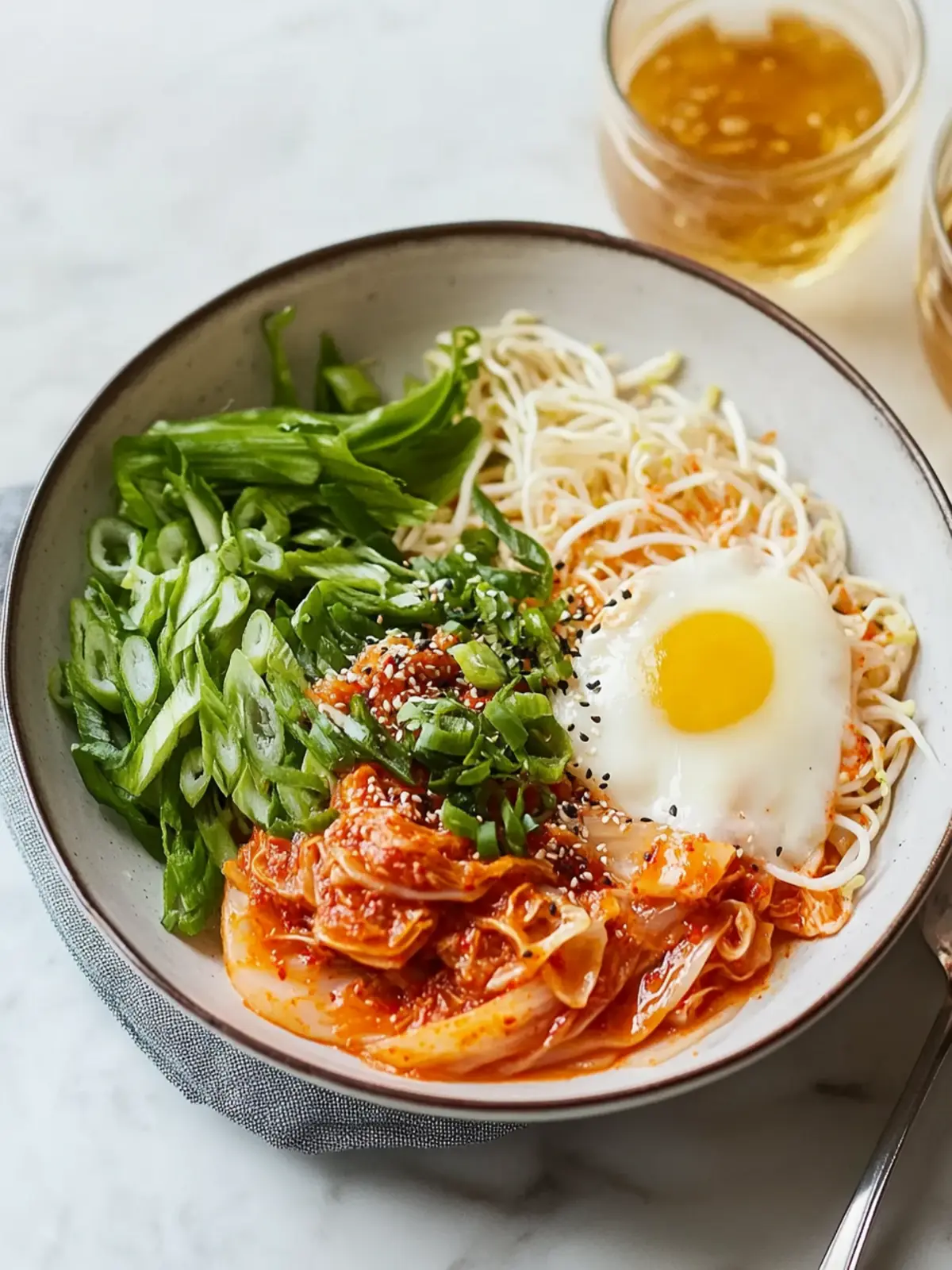
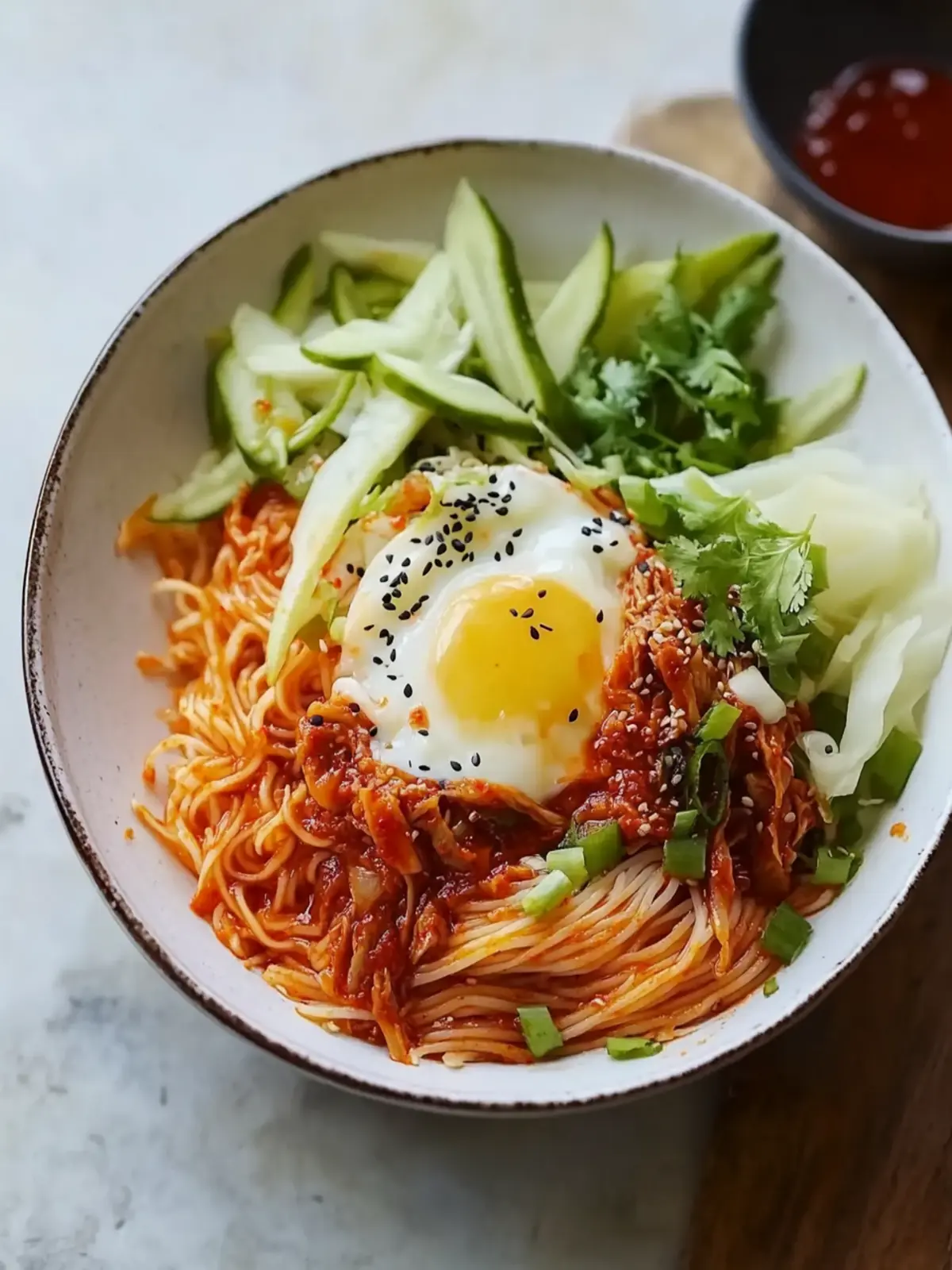
Serve: Divide the noodles into two bowls. Top each bowl with salad greens, julienned cucumber, carrot, and any optional garnishes like perilla leaves, gim, or soft-boiled eggs for a gourmet touch.
Optional: Add a sprinkle of extra sesame seeds for crunch and flavor.
Exact quantities are listed in the recipe card below.
Make Ahead Options
These Kimchi Bibim Guksu are a fantastic option for meal prep, allowing you to save time during busy weeknights! You can prepare the sauce and chop your vegetables up to 3 days in advance. Store the sauce (kimchi, gochujang, rice vinegar, sugar, soy sauce, sesame oil, garlic, and sesame seeds) in an airtight container in the refrigerator to keep its freshness. Cook the somyeon noodles, rinse them under cold water, and store them separately in the fridge for up to 24 hours. When you’re ready to enjoy your meal, simply combine the noodles with the sauce, add the veggies, and you’ll have a delicious, vibrant dish that tastes just as great as when freshly made!
What to Serve with Kimchi Bibim Guksu?
Let’s elevate your meal with delightful accompaniments that perfectly balance the vibrant flavors of this refreshing noodle dish.
-
Grilled Chicken: Juicy, marinated chicken adds a hearty element that pairs beautifully with the spicy, tangy noodles. It complements the dish’s bold flavors while providing satisfying protein.
-
Korean Pancakes (Pajeon): These savory pancakes offer a crispy texture that contrasts the chewy noodles. Their mild flavor allows the seasoning of the Bibim Guksu to shine, making each bite a harmonious experience.
-
Pickled Radishes: A refreshing, tangy side that cleanses the palate between bites, pickled radishes enhance the dish’s flavors and add a lovely crunch.
-
Sesame Spinach Salad: This light and unadorned side introduces a different texture, with the nutty sesame dressing echoing the flavors in your noodles, making it a delightful pairing.
-
Spicy Tofu Bites: Crispy tofu marinated in gochujang and served hot creates a delicious contrast to the cold noodles, adding depth and a gentle heat that lingers pleasantly.
-
Cold Beer or Sparkling Water: Refreshing drinks like a light lager or sparkling water with lemon complement the spice of the dish while enhancing the overall dining experience.
-
Mango Sorbet: For dessert, this fruity and refreshing treat allows your taste buds to settle down after the meal’s spice, finishing off your Korean culinary adventure with a sweet note.
Each of these pairings enriches the meal, creating a well-rounded dining experience that honors the essence of Kimchi Bibim Guksu!
Variations & Substitutions for Kimchi Bibim Guksu
Feel free to unleash your culinary creativity with these tasty twists that can elevate your Kimchi Bibim Guksu experience!
- Gluten-Free: Use rice noodles or quinoa noodles to make this dish suitable for those avoiding gluten.
- Protein-Packed: Add grilled chicken, shrimp, or tofu to create a more filling and nutritious meal—perfect for lunch or dinner.
- Vegan Delight: Swap out any animal-based ingredients for plant-based alternatives, such as using maple syrup in place of sugar and ensuring your kimchi is vegan.
- Spicy Boost: If you crave an extra kick, toss in some sliced jalapeños or crushed red pepper flakes for a fiery flavor burst.
- Veggie Medley: Go colorful by mixing in bell peppers, radishes, or snap peas; this not only enhances the dish’s appeal but also packs it with nutrients.
- Creamy Twist: Incorporate a dollop of creamy avocado or a scoop of peanut butter to provide a rich, velvety texture to the sauce.
- Citrusy Zing: Add a splash of lime or lemon juice before serving to brighten the flavors and give it a refreshing lift.
- Herb Infusion: Fresh herbs like cilantro or Thai basil can add aromatic notes and elevate the overall taste of your Kimchi Bibim Guksu.
With these variations, your culinary journey is boundless—let your imagination guide you to delicious new combinations!
Expert Tips for Kimchi Bibim Guksu
- Noodle Texture: Avoid overcooking the noodles; they should be tender yet chewy for the best Kimchi Bibim Guksu experience.
- Adjust Spice Levels: If you’re sensitive to heat, start with less gochujang and gradually add more until you find your perfect spice balance.
- Customize Veggies: Feel free to get creative with the vegetables you use! Leftovers like bell peppers or radishes add color and crunch to your dish.
- Rinse Thoroughly: Rinse the cooked noodles under cold water to stop cooking and maintain their delightful chewiness.
- Hands-On Mixing: For that authentic touch of “sohn mat,” mix the sauce with your hands to truly embrace the flavors and warmth of home cooking.
How to Store and Freeze Kimchi Bibim Guksu
Fridge: Keep any leftover Kimchi Bibim Guksu in an airtight container in the fridge for up to 3 days. Make sure the noodles and sauce are well mixed to maintain flavor.
Make-Ahead: You can prepare the noodles and sauce separately a few hours in advance. This ensures the noodles stay chewy and the flavors remain fresh.
Freezer: Freezing is not recommended for the entire dish, as the fresh veggies and noodles do not retain their texture well. However, you can freeze the sauce in an airtight container for up to a month.
Reheating: If you have leftovers, gently reheat the noodles in warm water or skip the heating and enjoy them cold for a refreshing bite any time!
Kimchi Bibim Guksu Recipe FAQs
How do I choose the right noodles for Kimchi Bibim Guksu?
Absolutely! For Kimchi Bibim Guksu, somyeon noodles are the traditional choice because of their thin, chewy texture. If you prefer a gluten-free option, soba noodles made from buckwheat are a great alternative. Ensure that the noodles are fresh and free from any dark spots or discoloration for the best quality!
What is the best way to store leftovers?
Store any leftover Kimchi Bibim Guksu in an airtight container in the fridge for up to 3 days. To enjoy the freshest flavors, I recommend keeping the noodles and sauce well mixed. If you want to prepare it in advance, you can separate the noodles and sauce a few hours ahead of time, ensuring the noodles maintain their delightful chewiness.
Can I freeze Kimchi Bibim Guksu?
While it’s not advisable to freeze the entire dish due to the fresh vegetables and noodles losing their texture, you can certainly freeze the spicy sauce! Transfer any unused sauce to an airtight container and store it in the freezer for up to a month. When you’re ready to use it, just thaw it in the fridge overnight before mixing it with fresh, cooked noodles.
What should I do if my noodles are too soft or sticky?
If your noodles end up too soft, it’s likely they were overcooked. For the perfect texture, cook them according to the package instructions and quickly rinse them under cold water. This halts the cooking process. If they stick together, gently toss them in a bit of sesame oil before mixing with the sauce, which should help separate them and add more flavor.
Are there any dietary considerations for making Kimchi Bibim Guksu?
Certainly! Always check the ingredient labels for any potential allergens, especially with condiments like gochujang and soy sauce, as they can contain gluten or other allergens. If you’re preparing this dish for pets or someone with allergies, consider substituting any allergenic ingredients with alternatives such as tamari for soy sauce or using homemade kimchi without fish sauce.
How can I make my Kimchi Bibim Guksu spicier?
Very easily! To customize the heat level, simply adjust the amount of gochujang you add to the sauce—start with a small amount, taste, and then gradually increase until you reach your desired spice level. You can also mix in additional chili flakes or a dash of hot sauce if you’re feeling adventurous!
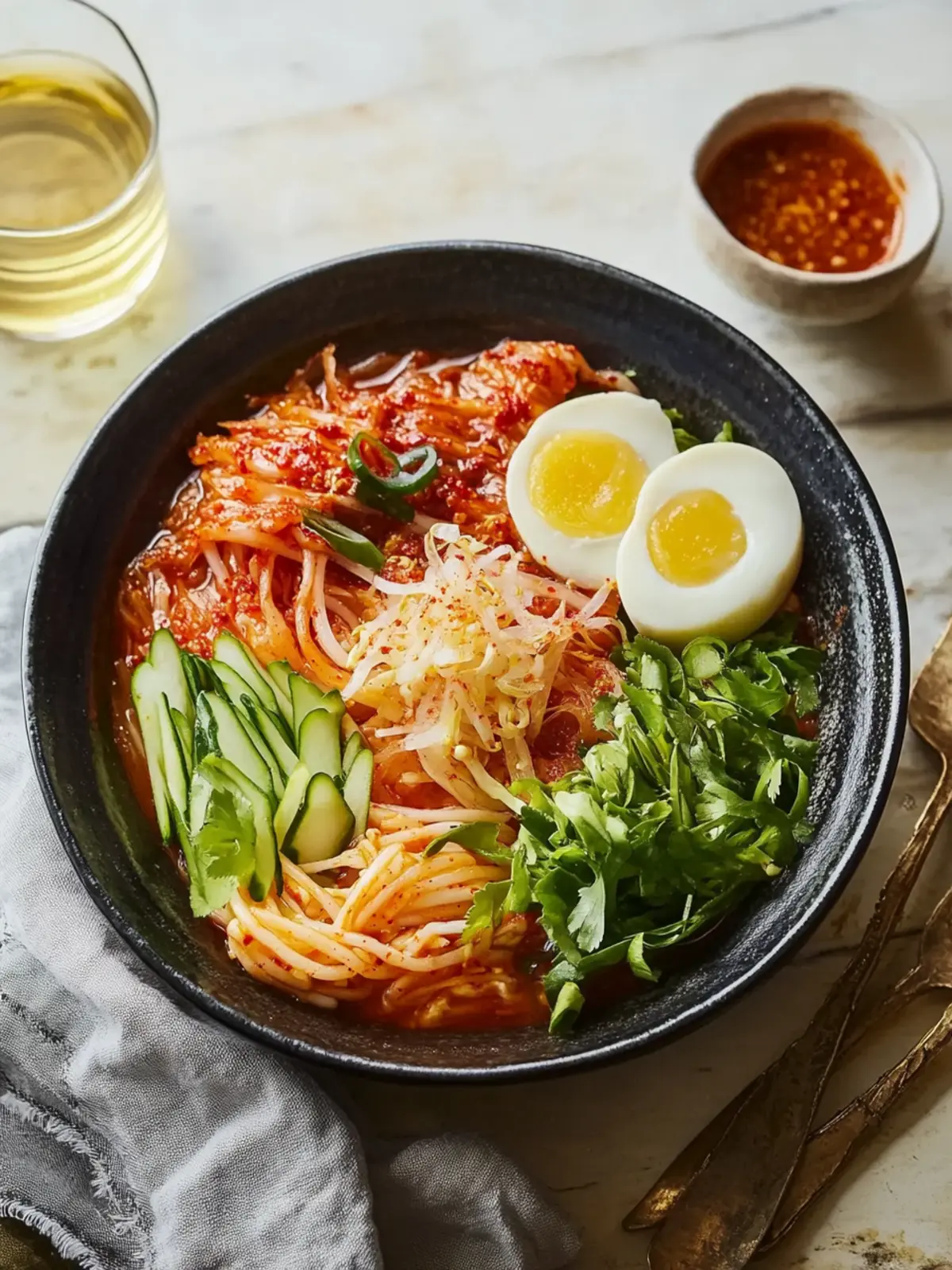
Refreshing Kimchi Bibim Guksu: Your New Summer Favorite
Ingredients
Equipment
Method
- Bring a large pot of water to a rolling boil. Cook the somyeon or soba noodles according to the package instructions, usually around 4-5 minutes, until just tender but chewy.
- Drain the cooked noodles and rinse them under cold water to maintain their chewiness and stop the cooking process.
- In a mixing bowl, combine the kimchi, gochujang, rice vinegar, sugar, soy sauce, sesame oil, minced garlic, and roasted sesame seeds. Whisk until smooth.
- In a large serving bowl, combine the cooled noodles with the prepared sauce and mix gently.
- Divide the noodles into two bowls. Top with salad greens, julienned cucumber, carrot, and any optional garnishes.