
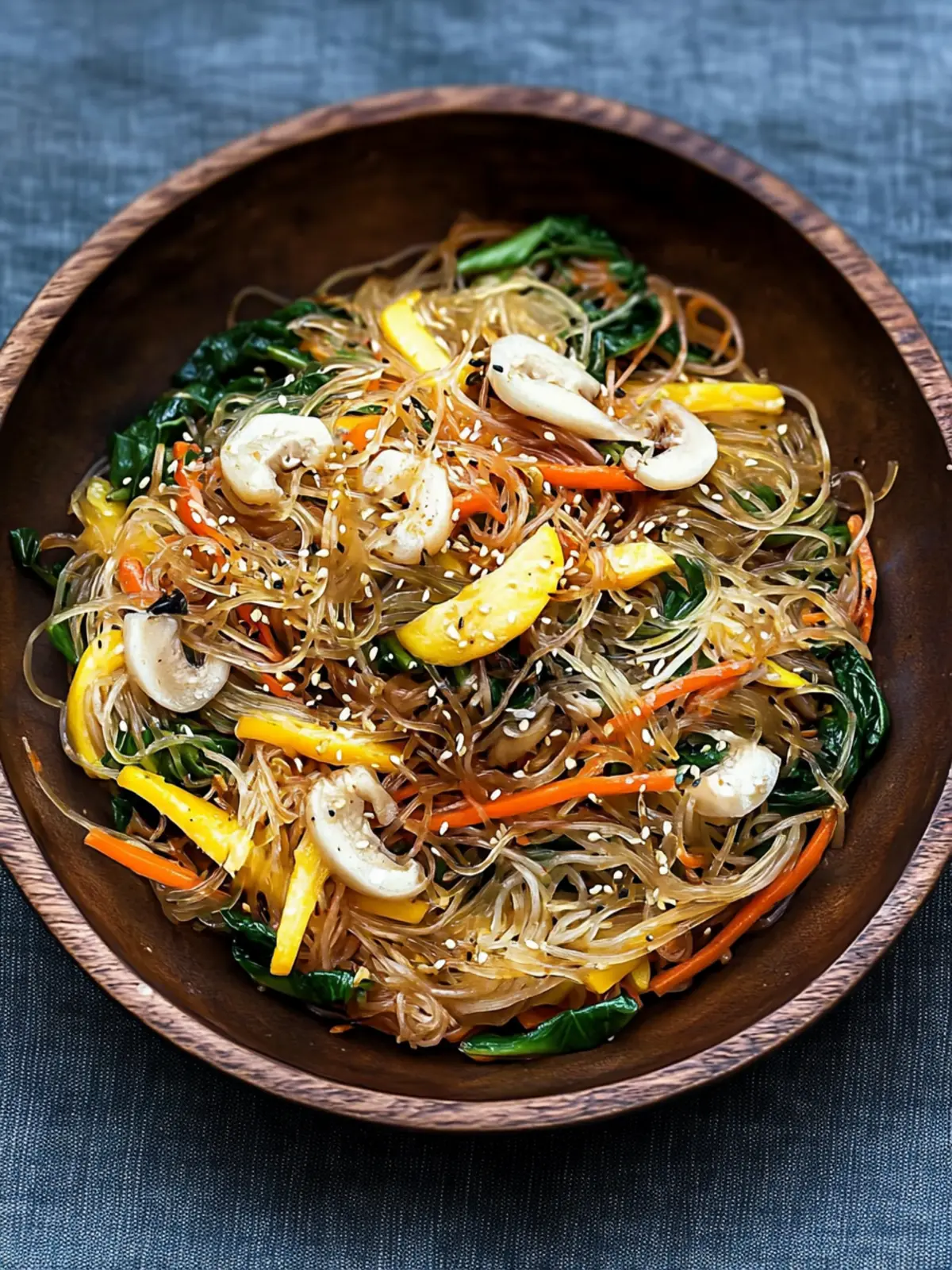
There’s something truly special about preparing Japchae during the Lunar New Year—a dish steeped in tradition and rich in symbolism. As the sweet potato glass noodles slip through your fingers, you can’t help but feel the anticipation building for what lies ahead. This flavorful stir-fry embodies the essence of celebration, with each bite delivering a delightful chewy texture and an umami depth that dances on the palate.
I discovered Japchae during my quest for healthier, homemade meals to share with family and friends. Tantalizing and versatile, it’s perfect for festive gatherings or as a comforting weeknight dinner. You can indulge in its vibrant flavors warm or at room temperature, making it the ideal dish for potlucks. As we embrace the Lunar New Year, let’s honor tradition while creating memories over a simmering skillet filled with colorful vegetables and tender beef—or perhaps tofu for a vegetarian twist. Get ready to unlock the joy of cooking with this simple yet elegant Longevity Noodles recipe that will leave everyone craving more!

Why is Japchae the Ultimate Comfort Food?
Versatile Delight: Japchae is a dish that caters to everyone—whether you’re a meat-lover or prefer a vegetarian feast, the recipe seamlessly adapts to your preferences.
Mouthwatering Umami: The stunning blend of soy sauce, sesame oil, and fresh vegetables develops an irresistible savory depth that keeps your taste buds thrilled.
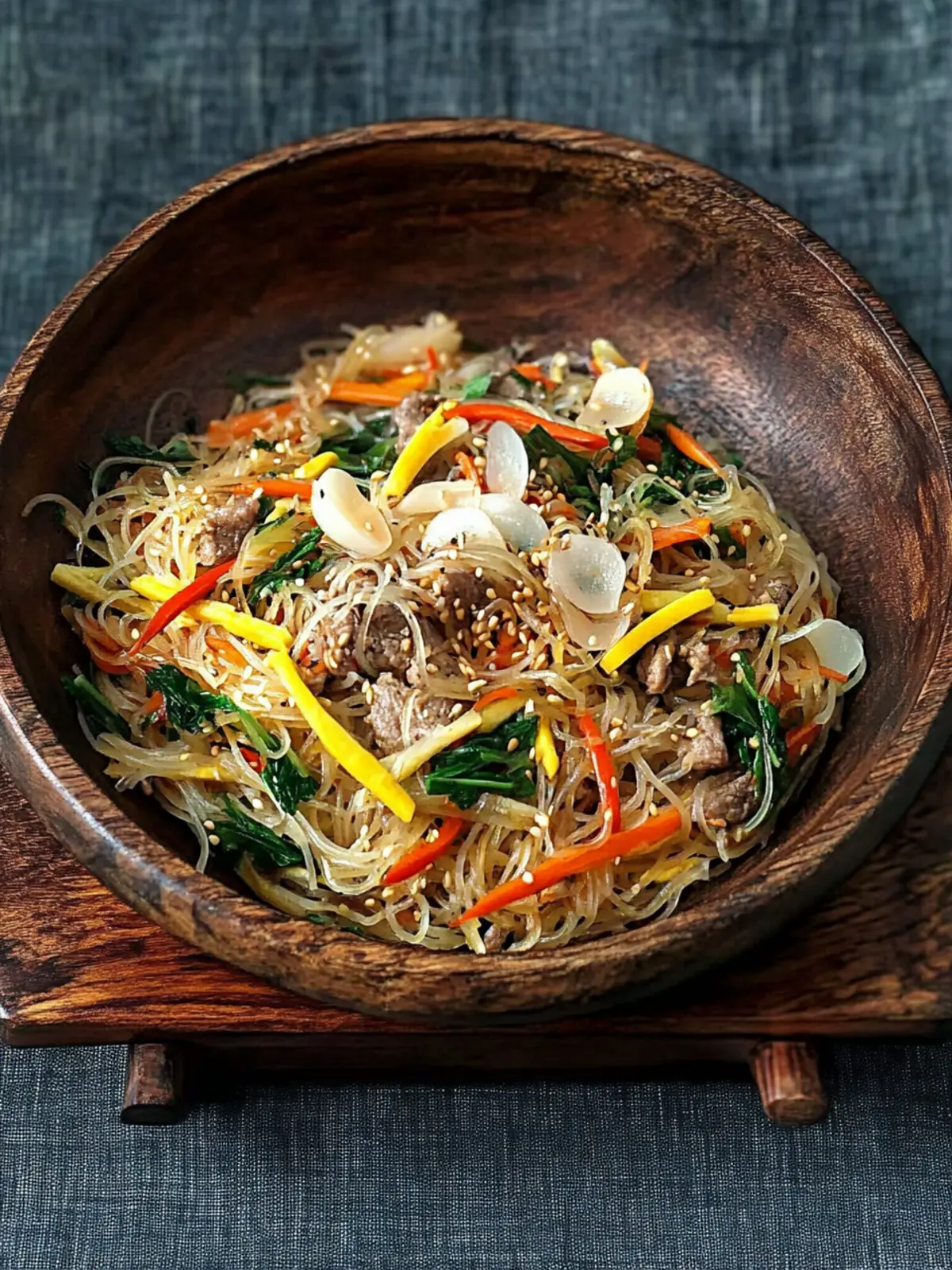
Colorful Presentation: Each serving resembles a vibrant mosaic, making it not only delicious but also visually appealing for your gatherings.
Quick Cooking: With its straightforward preparation methods, you can whip up Japchae in no time, perfect for those busy weeknights or last-minute entertaining.
Cultural Connection: Celebrate the Lunar New Year with Japchae, a dish traditionally linked to prosperity and longevity, infusing your feast with meaningful heritage.
Crowd-Pleasing Option: Its chewy noodles combined with crunchy vegetables make it a hit at any potluck! You’ll want to check out how to make this classic Japchae recipe for an unforgettable culinary experience.
Japchae Ingredients
For the Noodles
- Sweet Potato Noodles – The star of the dish; they provide a delightful chewiness that is essential in Japchae.
- Water – Needed to soak the noodles until they soften perfectly.
For the Marinade
- Beef Strips – Add richness and protein; can be substituted with tofu or omitted for a vegetarian version.
- Soy Sauce – Main seasoning that brings savory flavor; opt for low-sodium for a healthier option.
- Sugar – Provides slight sweetness to balance flavors, though you can reduce or omit it as desired.
- Toasted Sesame Oil – Infuses a nutty aroma; regular sesame oil works if toasted isn’t available.
- Garlic – Enhances aroma and depth; garlic powder can be utilized in a pinch.
- Ginger – Adds warmth and spice; optional for milder preferences.
- Black Pepper – A simple spice element; adjust the quantity according to your taste.
For the Vegetables
- Spinach – Adds color and nutrients; feel free to substitute with other leafy greens like kale.
- Scallions – Provide freshness and crunch, with chives as a mild substitute if needed.
- Carrots – Offer sweetness and visual appeal; consider zucchini for another texture.
- Bell Peppers – Any color works to add sweetness and vibrant color.
- Shiitake Mushrooms – Introduce umami flavors and a chewy texture; button mushrooms serve as a substitute if necessary.
- Lotus Root – Known for its unique crunch; replace with water chestnuts if desired.
For Garnishing
- Eggs – Use as a garnish for additional protein and visual appeal; simply omit for a vegan Japchae.
- Nori Strips – Adds an extra layer of umami; optional for those not familiar with its taste.
Feel the excitement of preparing your Japchae as you gather these essential ingredients, setting the stage for a delightful culinary journey!
How to Make Japchae
-
Prepare Beef: Cut beef into ½-inch strips and marinate in a mixture of sugar, soy sauce, toasted sesame oil, minced garlic, ginger, and black pepper. Let it sit for 30 minutes to absorb those delicious flavors.
-
Blanch Lotus Root (optional): If using lotus root, blanch the sliced pieces in boiling water until tender, then marinate them in soy sauce until they cool for an added zing.
-
Soak Noodles: Place the sweet potato noodles in warm water for 30 minutes until they soften beautifully. You’ll want them just tender to maintain that lovely chewiness.
-
Blanch Spinach: Quickly blanch the spinach in salted boiling water for 1-2 minutes, then cool it down, chop, and set it aside. You want that vibrant green color!
-
Sauté Vegetables: Heat some oil in a skillet and sauté scallions, carrots, and bell peppers separately until tender—this keeps their flavors vibrant. Let them cool on a tray.
-
Cook Mushrooms: In the same skillet, sauté shiitake mushrooms until golden. A tip: add minced garlic towards the end to lock in that aromatic goodness without burning.
-
Cook Beef: In the skillet, sauté the marinated beef until just tender, about 3-4 minutes. Again, resist overcooking to keep that juicy texture.
-
Cook Noodles: Boil the soaked noodles with some soy sauce, drain them, rinse with cold water, and dress with additional sauce ingredients to infuse flavor.
-
Combine Ingredients: In a large mixing bowl, toss the noodles with all the sautéed vegetables and beef, adjusting seasoning as needed for a perfect balance.
-
Garnish and Serve: Top your beautiful dish with julienned omelet and nori strips for added crunch and umami. Serve warm or at room temperature for the best experience!
Optional: Add a sprinkle of sesame seeds for an extra crunchy finish.
Exact quantities are listed in the recipe card below.
How to Store and Freeze Japchae
Fridge: Store leftover Japchae in an airtight container for up to 3 days. This is a great way to enjoy this delightful stir-fry later.
Freezer: Freeze Japchae in a sealed container for up to 2 months. Ensure it’s cooled down before packaging to prevent ice crystals from forming.
Reheating: When ready to enjoy, thaw in the fridge overnight, then reheat gently on the stove with a splash of soy sauce to restore moisture and flavor.
Room Temperature: Avoid leaving Japchae out for more than 2 hours to maintain freshness and prevent spoilage.
What to Serve with Japchae?
Enjoy your Japchae with perfect companions that elevate this delightful dish to new heights!
-
Kimchi: This iconic Korean side adds a spicy, tangy bite, balancing the sweetness of the noodles beautifully. Its fermented goodness enriches your meal and enhances the overall experience.
-
Steamed Rice: Having a bed of fluffy white rice offers a satisfying contrast to the chewy noodles, making every bite more comforting and hearty. It’s a traditional pairing that never goes out of style.
-
Fresh Cucumber Salad: Crisp and refreshing, this salad provides a cool crunch that cuts through the richness of the Japchae. Tossed with sesame oil and a sprinkle of salt, it’s a vibrant addition.
-
Miso Soup: Warm and soothing, miso soup complements the flavorful complexity of Japchae, adding a comforting layer to your meal. Together, they create a harmonious balance of textures and tastes.
-
Green Tea: A gentle, earthy tea enhances the flavors of your meal, cleansing the palate after each savory bite. Its warmth invites a moment of relaxation alongside the vibrant dish.
-
Sesame Balls for Dessert: Finish on a sweet note! These chewy, sweet treats offer a delightful contrast to your savory meal, ensuring a delicious end to the dining experience.
With these thoughtful pairings, your Japchae becomes a centerpiece of a joyful, memorable meal.
Make Ahead Options
Japchae is an ideal recipe for busy home cooks looking to save time while still enjoying a delicious meal! You can prepare the marinated beef and sautéed vegetables up to 24 hours in advance, storing them separately in airtight containers in the refrigerator to maintain their freshness. The sweet potato noodles can also be soaked in warm water and kept in the fridge for a few hours before cooking. When ready to serve, simply stir-fry the beef, add the vegetables and cooked noodles, and toss everything together with the seasoning. This way, you’ll have flavorful, homemade Japchae on the table in no time, just as delicious as when freshly made!
Expert Tips for Making Japchae
-
Noodle Softness: Soak sweet potato noodles until they are al dente to prevent them from becoming mushy. This maintains the perfect chewy texture essential for traditional Japchae.
-
Separate Sautéing: Sauté each vegetable individually to keep their distinct flavors and textures vibrant. Mixing them in one pan can lead to sogginess—each bite should shine!
-
Season Wisely: Taste your mixture as you combine ingredients. Adjust the soy sauce and sugar gradually to prevent over-seasoning, ensuring your Japchae is balanced and delicious.
-
Bite-Sized Pieces: Cut vegetables and beef into uniform sizes so they cook evenly and fit nicely on your fork, enhancing the enjoyment of each hearty bite.
-
Garnishment Choices: For a stunning presentation, remember to add nori strips and a vibrant julienned omelet on top before serving your Japchae. These not only add umami but also visual appeal!
-
Flexible Variations: Feel free to mix and match seasonal vegetables. Utilizing what you have on hand strikes a great balance and brings freshness to your Japchae!
Japchae Variations & Substitutions
Feel free to embrace your creativity and make this dish your own with these exciting tweaks and substitutions!
-
Gluten-Free: Use tamari or coconut aminos in place of soy sauce for a gluten-free option without losing flavor.
-
Vegetarian Delight: Substitute beef with marinated tofu or tempeh for a hearty, plant-based version that pairs beautifully with the noodles.
-
Extra Crunch: Toss in a handful of roasted peanuts or cashews for an added crunchy texture, elevating the overall experience.
-
Colorful Veggies: Swap out traditional vegetables with seasonal options like asparagus or snap peas for a fresh twist each time you make it.
-
Heat it Up: Add thinly sliced chili peppers or a dash of chili oil to crank up the heat, making each bite an exciting adventure.
-
Fruit Fusion: Consider including sliced bell peppers or even pineapple chunks for a fruity sweetness that pairs deceptively well with the savory elements.
-
Noodle Alternatives: If you can’t find sweet potato noodles, feel free to substitute with rice noodles for a similar texture and taste.
-
Egg Variations: To make it vegan, omit the eggs entirely, or replace them with scrambled chickpea flour for a delicious egg-like alternative!
Each of these variations allows you to experience Japchae in a new light, making it a truly adaptable dish that matches your cravings and dietary needs. Enjoy experimenting!
Japchae (Korean Glass Noodles) Recipe FAQs
What type of sweet potato noodles should I use for Japchae?
Absolutely! Look for “sweet potato glass noodles” or “dangmyeon” at your local Asian grocery store. These unique noodles are essential for their chewy texture that defines this delightful dish. They are gluten-free, making them a perfect choice for those with dietary restrictions.
How should I store leftover Japchae?
Store any leftover Japchae in an airtight container in the fridge for up to 3 days. Ensure it’s cooled down before sealing to maintain the best texture. If you can, enjoy it cold or at room temperature, as reheating may soften the noodles further.
Can I freeze Japchae?
Yes, you can freeze Japchae! Transfer cooled leftovers to a sealed container or a freezer bag, making sure to remove as much air as possible to avoid freezer burn. It’s best enjoyed within 2 months for optimal flavor and texture.
What if my noodles are mushy after cooking?
Very important! If your noodles turn out mushy, it may be due to over-soaking or boiling them too long. Next time, soak the noodles just until tender (about 30 minutes) and ensure they only boil until al dente. To salvage overcooked noodles, try tossing them in a hot skillet with a bit of oil to help reintroduce some texture.
Is Japchae a healthy option for a balanced diet?
Definitely! Japchae is a wonderful way to incorporate vegetables and whole food ingredients into your meals, as it provides a good balance of carbohydrates, vitamins, and proteins. By substituting the beef for tofu or omitting it altogether, you can create a nutritious vegetarian or vegan dish.
Are there any allergens in Japchae?
Be mindful of allergic reactions! The primary allergens in Japchae can include soy (from soy sauce) and sesame (from sesame oil). You might consider using gluten-free soy sauce if you’re sensitive to gluten. Always double-check labels for any potential allergens, especially if serving guests with dietary restrictions.
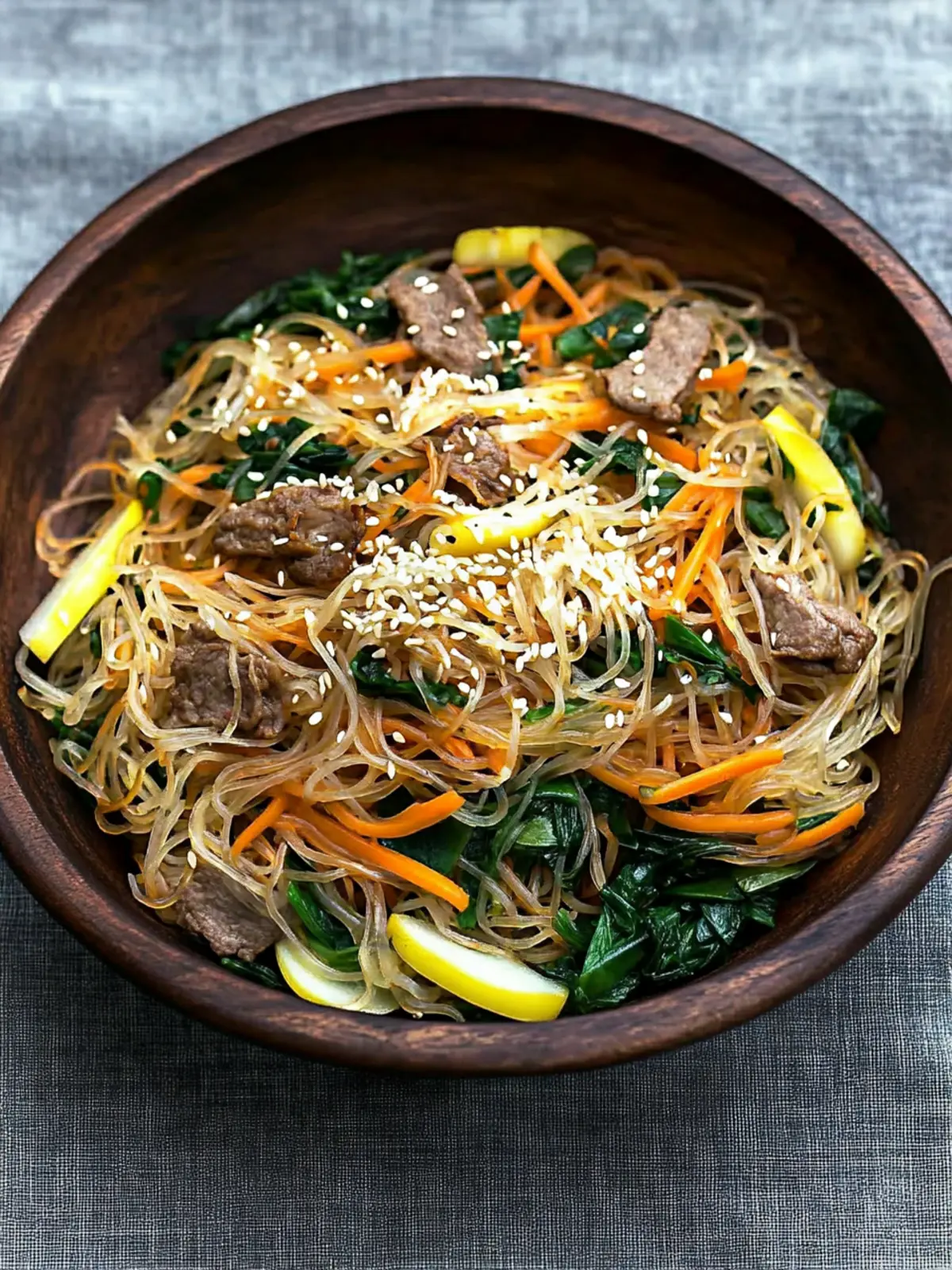
Japchae: Longevity Noodles Recipe for a Festive Lunar New Year
Ingredients
Equipment
Method
- Cut beef into ½-inch strips and marinate in a mixture of sugar, soy sauce, toasted sesame oil, minced garlic, ginger, and black pepper. Let it sit for 30 minutes.
- If using lotus root, blanch the sliced pieces in boiling water until tender, then marinate them in soy sauce until they cool.
- Place the sweet potato noodles in warm water for 30 minutes until they soften.
- Quickly blanch the spinach in salted boiling water for 1-2 minutes, then cool it down, chop, and set it aside.
- Heat some oil in a skillet and sauté scallions, carrots, and bell peppers separately until tender.
- Sauté shiitake mushrooms in the same skillet until golden, adding minced garlic towards the end.
- Sauté the marinated beef until just tender, about 3-4 minutes.
- Boil the soaked noodles with some soy sauce, drain them, rinse with cold water, and dress with additional sauce.
- In a large mixing bowl, toss the noodles with all sautéed vegetables and beef, adjusting seasoning as needed.
- Top with julienned omelet and nori strips, serve warm or at room temperature.