
There’s a certain joy in discovering a dish that feels both indulgent and nourishing, isn’t there? This vibrant Greek salad is exactly that—a beautiful balance of fresh, crunchy veggies and creamy feta that dances on your palate. As I tossed together the crisp romaine, juicy tomatoes, and zesty olives, I could almost hear the gentle waves of the Mediterranean beckoning me. Perfect for a quick lunch or a stunning side at dinner, this salad embodies all the bright and bold flavors of the season. You’ll find it’s not just a meal; it’s an invitation to celebrate the bounty of fresh ingredients!
The goodness doesn’t end there. This Mediterranean delight is vegetarian-friendly and surprisingly versatile, making it a fantastic addition to your repertoire. Whether you’re looking for a light bite after a long day or a dish that looks as gorgeous as it tastes for a gathering, this Greek salad promises to impress without a fuss. Ready to dive into the recipe? Let’s get started!

Why is Greek Salad so popular?
Flavorful and Fresh: This Greek Salad bursts with vibrant colors and flavors that refresh the palate.
Quick to Prepare: With just a few simple ingredients, you can whip this up in no time.
Healthy Choice: Packed with veggies and healthy fats, it’s a delightful guilt-free treat.
Endless Customization: Swap or add ingredients like chickpeas or grilled chicken to suit your taste.
Crowd Pleaser: Impress your guests with a dish that not only looks beautiful but also tastes divine.
Elevate your culinary skills with this satisfying salad, and be sure to check out more healthy recipes that complement this Mediterranean classic!
Greek Salad Ingredients
For the Salad
- Thinly sliced and halved red onion – Soaking in cold water softens the bite, making it more palatable.
- Romaine lettuce – Provides a crisp and satisfying crunch; iceberg can be substituted for a similar texture.
- English cucumber – Offers a cool, refreshing element; any garden cucumber works well as a substitute.
- Grape or cherry tomatoes – Contributes bursts of sweetness and juiciness; larger chopped tomatoes can be used if necessary.
- Green bell pepper – Adds mild crunch and color; use yellow or red bell peppers for a sweeter flavor.
- Kalamata olives – Imparts a briny richness; green olives can make a suitable alternative.
- Capers – Optional for added brininess; omit for a milder flavor if desired.
- Feta cheese – Provides creaminess and tang; brine-cured feta enhances the dish, while goat cheese works too.
- Fresh herbs (dill or parsley) – Elevates freshness and flavor; basil or oregano can make fine substitutes.
For the Dressing
- Extra virgin olive oil – Serves as the flavorful base for the dressing.
- Red wine vinegar – Adds acidity to balance flavors; white wine vinegar is an excellent alternative.
- Garlic – Grated or minced, it adds depth of flavor to the dressing.
- Kosher salt – Enhances all other flavors; sea salt can be used as an alternative.
- Dried oregano – A classic Mediterranean herb that complements the salad beautifully; thyme can be a delightful substitution.
- Ground black pepper – For seasoning, it adds warmth to the overall dish.
Embrace the vibrant flavors of this Greek Salad and make it your go-to refreshing meal!
How to Make Greek Salad
- Prepare Red Onion: Soak the thinly sliced red onion in cold water for at least 5 minutes to mellow its flavor, then drain well before adding it to the salad.
- Make Dressing: In a small bowl, whisk together the extra virgin olive oil, red wine vinegar, grated garlic, kosher salt, dried oregano, and ground black pepper until well combined.
- Combine Romaine and Dressing: Place the chopped romaine lettuce in a large bowl, and drizzle lightly with the dressing. Toss gently to coat the leaves evenly.
- Add Vegetables: Mix in the English cucumber, halved grape tomatoes, green bell pepper, Kalamata olives, capers (if using), and the drained red onion. Drizzle with a bit more dressing and gently toss to combine.
- Incorporate Feta: Crumble and gently fold in 3/4 of the feta cheese, taking care not to break it too much. Taste and adjust the seasoning with salt and pepper as needed.
- Serve: Plate the salad and sprinkle the remaining feta on top. Serve with extra dressing on the side for your guests to enjoy.
Optional: Garnish with fresh herbs like dill or parsley for an added touch of flavor.
Exact quantities are listed in the recipe card below.
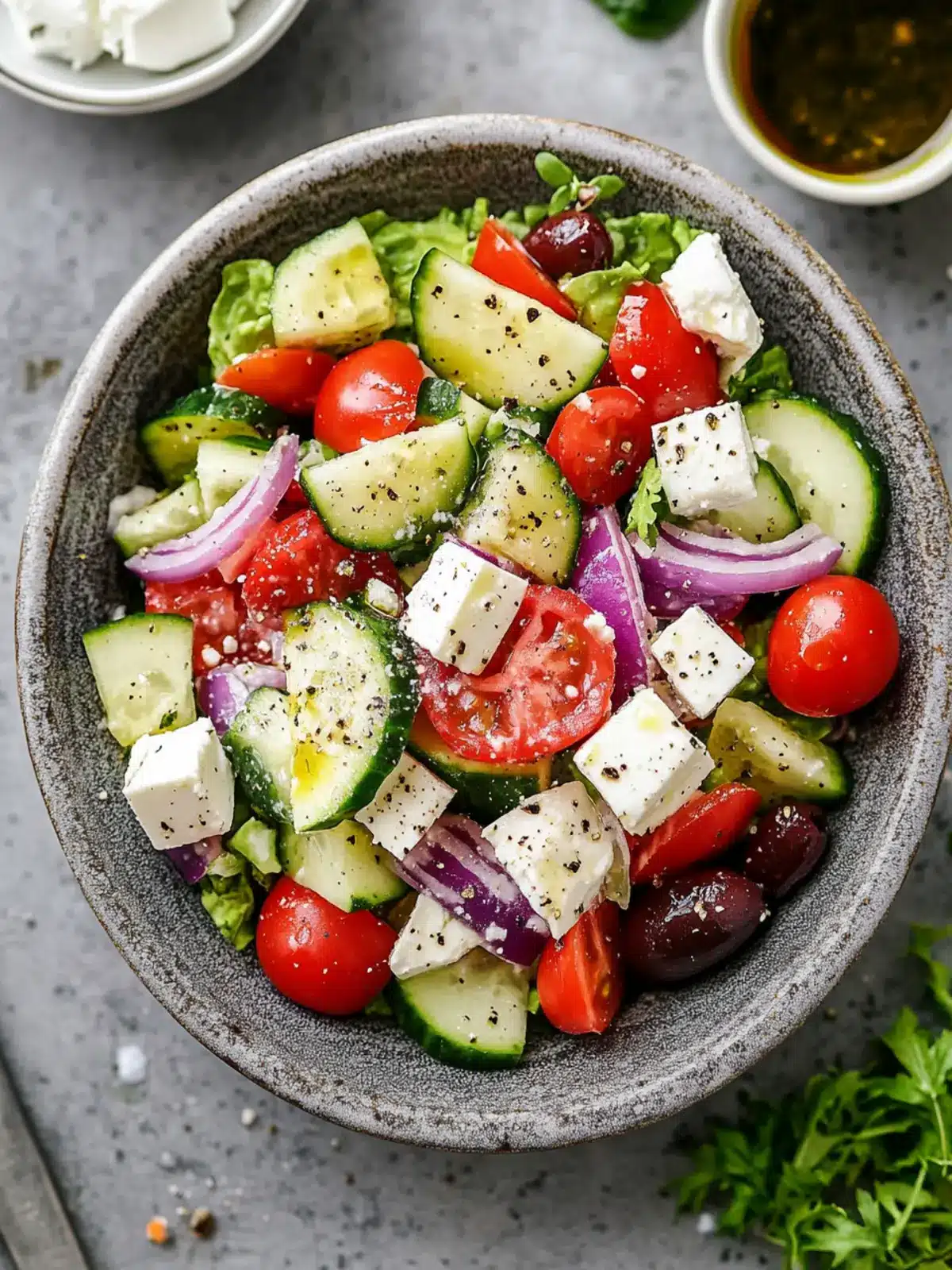
Expert Tips for Greek Salad
-
Choose Quality Ingredients: Using fresh vegetables and high-quality feta elevates your Greek salad’s flavor significantly.
-
Don’t Skip the Soaking: Soaking the red onion in cold water is essential to mellow its sharpness, making it much more enjoyable to eat.
-
Perfectly Balanced Dressing: Be mindful of the dressing proportions; it’s better to start light and offer extra on the side rather than overdressing the salad.
-
Explore Variations: Feel free to mix in proteins like chickpeas or grilled chicken for a heartier meal. This adaptability keeps the Greek salad exciting!
-
Leftover Storage: Store any leftovers in an airtight container and consume within 2 days for the best taste and freshness.
Make Ahead Options
Preparing your Greek Salad in advance is a fantastic way to save time during busy weeks! You can chop the vegetables—like cucumber, bell pepper, and tomatoes—up to 24 hours before serving, storing them in an airtight container in the refrigerator to maintain their crunch. The dressing can also be made ahead of time and stored separately, ensuring it stays fresh. Just add a splash of additional vinegar before using to revitalize it. When you’re ready to enjoy your salad, simply combine the prepped ingredients with the romaine, toss in the feta, and drizzle the dressing just before serving for a delightful, quick meal that is just as delicious as if you made it on the spot!
Greek Salad Variations
Feel free to explore these fun twists to make your Greek salad uniquely yours—your taste buds will thank you!
-
Mixed Greens: Swap romaine for mixed salad greens for a delightful variety and a burst of color. Each bite will take on different textures!
-
Chickpeas: Add a can of rinsed chickpeas for a protein boost. This transforms your salad into a filling and satisfying meal.
-
Grilled Chicken: Toss in some sliced grilled chicken breast to make it a heartier dish. It adds a delicious smoky flavor that pairs beautifully with the fresh ingredients.
-
Avocado: Incorporate creamy avocado for a silky texture and added healthy fats. It offers a rich, buttery flavor that complements the feta splendidly.
-
Roasted Red Peppers: Add slices of roasted red peppers for a sweet smokiness. They enhance the salad’s complexity and can brighten up your presentation.
-
Spicy Kick: Toss in sliced jalapeños or crushed red pepper flakes for a hint of heat. It’ll spark a delightful contrast to the creamy feta.
-
Herb Variations: Swap out dill or parsley for fresh basil or mint to change the herbal profile entirely. Each herb lends its own charm to the classic recipe.
-
Nuts or Seeds: Throw in some toasted pine nuts or sunflower seeds for a delightful crunch and nutty flavor. This twist brings added texture and a boost of nutrition!
Your journey into customizing this Greek salad can lead to exciting culinary creations every time!
What to Serve with Greek Salad?
Brighten up your meal with delicious pairings that complement the fresh, vibrant flavors of Greek salad.
-
Grilled Chicken Souvlaki: Tender, marinated chicken skewers add a hearty element, enhancing the Mediterranean theme of your meal.
-
Pita Bread: Soft, fluffy pita is perfect for scooping up the salad and creates a satisfying texture contrast with its chewiness.
-
Roasted Lamb Chops: Juicy, herb-infused lamb easily elevates your dining experience, bringing warmth and depth that contrasts beautifully with refreshing salad.
-
Tzatziki Sauce: This creamy yogurt dip, flavored with cucumber and garlic, makes for a cooling accompaniment that echoes the salad’s fresh vibes.
-
Quinoa Tabbouleh: This nutritious grain salad, rich with parsley and tomatoes, makes a lovely addition full of texture and complements the Greek flavors delightful.
-
Sparkling Water with Lemon: A light, effervescent drink enhances the refreshing fruity notes of the salad and keeps you invigorated without overpowering the meal.
-
Baklava: Finish your meal on a sweet note with this honey-soaked pastry, providing a rich contrast to the Greek salad’s lightness.
Enjoy these pairings with your Greek salad for a meal that balances textures and flavors in every bite!
Storage Tips for Greek Salad
Fridge: Store leftovers in an airtight container for up to 2 days to maintain freshness. Make sure to keep the dressing separate until ready to serve.
Freezer: Freezing is not recommended for Greek salad, as the delicate vegetables and feta may lose their texture upon thawing.
Reheating: This salad is best enjoyed cold. If serving with heated dishes, allow to come to room temperature before serving.
Room Temperature: If left out for more than 2 hours, discard to ensure food safety. Always keep your Greek salad chilled when not being served.
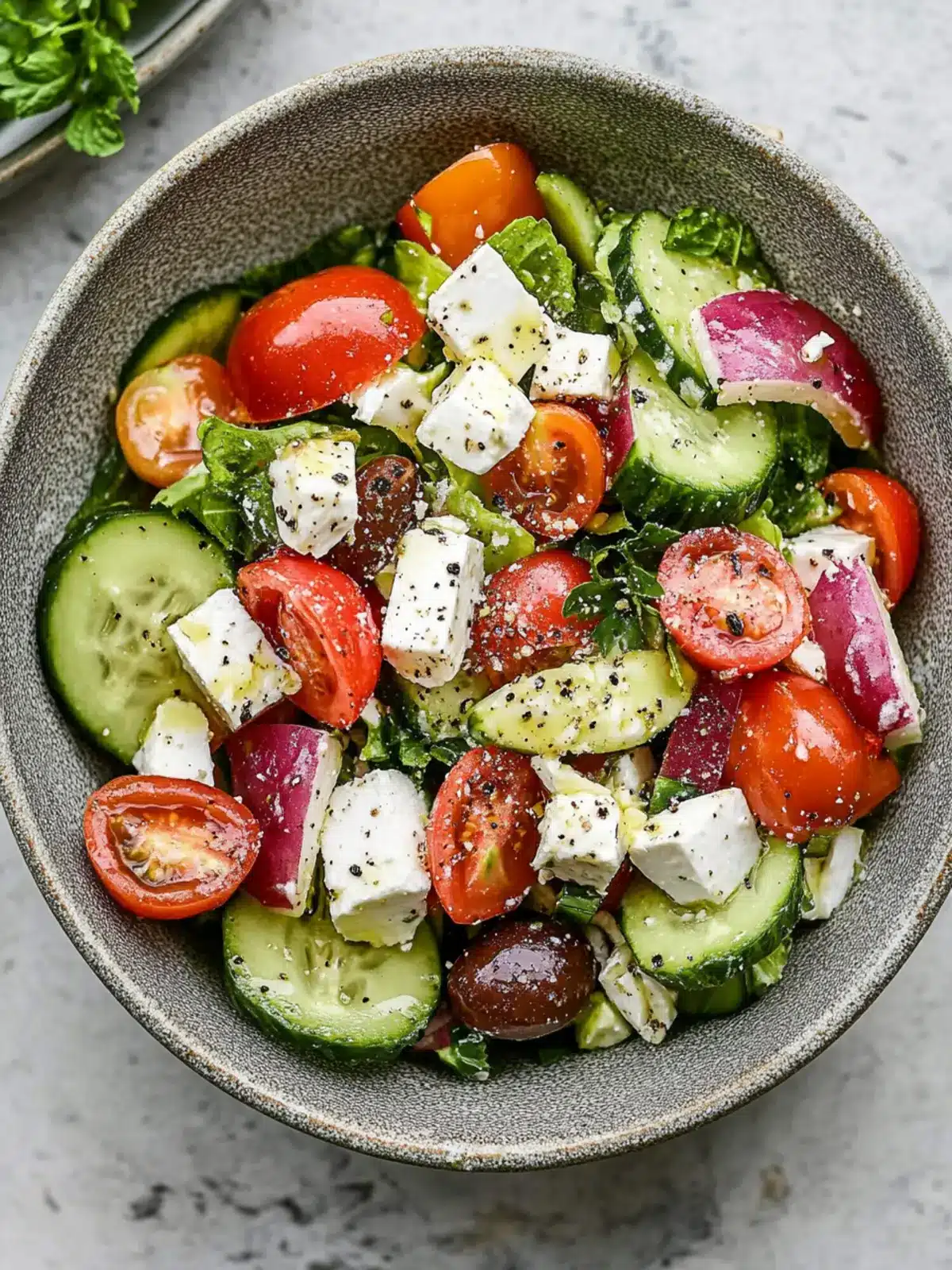
Greek Salad with Creamy Feta and Crunchy Veggies Recipe FAQs
What’s the best way to select ripe vegetables for Greek Salad?
Absolutely! For the freshest Greek Salad, look for vibrant tomatoes that feel slightly firm and have a deep red color. When choosing cucumbers, aim for those that are crisp and free of soft spots. The green bell pepper should be bright in color with a smooth skin, while the red onion should be firm and without dark spots – these cues ensure you’re picking the best ingredients for your dish!
How should I store leftovers of my Greek Salad?
Very important! Store any leftovers in an airtight container in the refrigerator for up to 2 days. To keep the flavors fresh, it’s best to store the dressing separately to avoid soggy veggies. Just toss in the dressing when you’re ready to enjoy it again!
Can I freeze Greek Salad?
No, freezing is not recommended for Greek Salad. The texture of the fresh veggies and creamy feta will suffer greatly after thawing. However, if you want to save time, you can pre-cut the vegetables and store them in the fridge for up to 3 days before preparing the salad.
What should I do if my salad dressing is too oily?
If you find that the dressing feels too oily, just whisk in a little more vinegar to balance it out. Start with a teaspoon at a time until you achieve your desired flavor. Remember, a good dressing shouldn’t overpower the salad—it should enhance all those beautiful fresh ingredients!
Is Greek Salad safe for my pets?
While some components are safe, it’s best to avoid giving your pets Greek Salad. Ingredients like onions and garlic can be harmful to dogs and cats. Stick to giving them plain, cooked veggies or a bit of cucumber without seasoning for treats!
Can I make Greek Salad low in sodium?
Absolutely! To make your Greek Salad lower in sodium, opt for low-sodium feta cheese and skip the capers or any added salt. Fresh herbs will still provide wonderful flavor without added sodium, so toss in plenty of those for a deliciously vibrant dish!
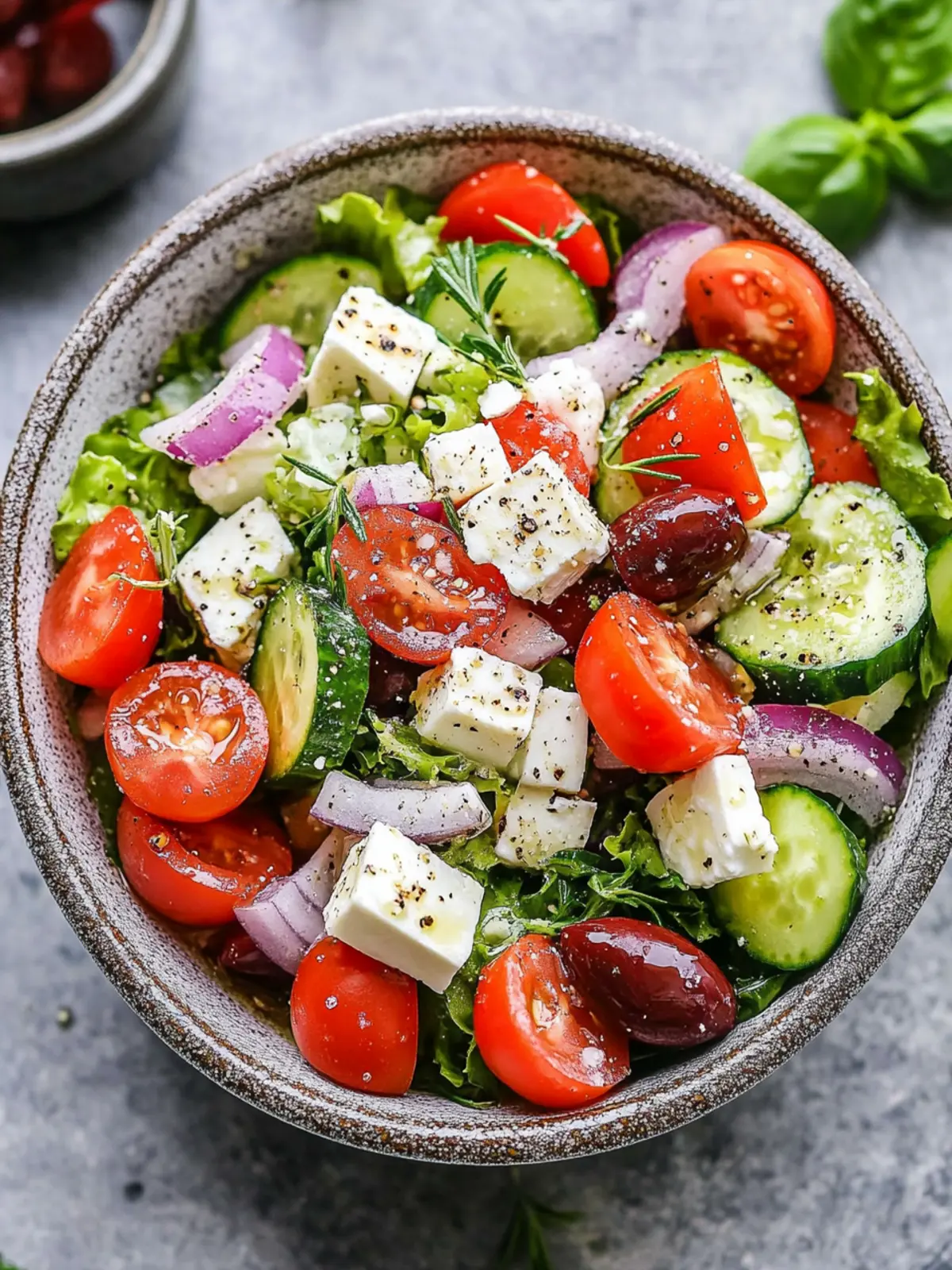
Irresistible Greek Salad with Creamy Feta and Fresh Veggies
Ingredients
Equipment
Method
- Soak the thinly sliced red onion in cold water for at least 5 minutes to mellow its flavor, then drain well before adding it to the salad.
- In a small bowl, whisk together the extra virgin olive oil, red wine vinegar, grated garlic, kosher salt, dried oregano, and ground black pepper until well combined.
- Place the chopped romaine lettuce in a large bowl, and drizzle lightly with the dressing. Toss gently to coat the leaves evenly.
- Mix in the English cucumber, halved grape tomatoes, green bell pepper, Kalamata olives, capers (if using), and the drained red onion. Drizzle with a bit more dressing and gently toss to combine.
- Crumble and gently fold in 3/4 of the feta cheese, taking care not to break it too much. Taste and adjust the seasoning with salt and pepper as needed.
- Plate the salad and sprinkle the remaining feta on top. Serve with extra dressing on the side for your guests to enjoy.