
When the evening sun begins to set and your kitchen fills with the warm scent of freshly cracked pepper, it’s time to call on a classic pasta comfort that never disappoints: Cacio e Pepe. This Roman treasure, which translates to “cheese and pepper,” requires only a handful of pantry staples yet delivers a dining experience that feels utterly indulgent. Just picture it: long strands of pasta coated in a rich, creamy sauce made from Pecorino Romano and Grana Padano, creating a delightful balance of sharp and buttery flavors that wrap around each noodle.
I first embraced this dish during a casual dinner with friends, where laughter and love simmered alongside the bubbling pot. It became my go-to recipe for weeknight meals, transforming humdrum dinners into moments of pure satisfaction. Whether you’re escaping the monotony of fast food or looking to impress without the fuss, Cacio e Pepe is your ticket to a deliciously simple yet elegant meal. Let’s dive into this easy-to-follow recipe that promises to bring joy to your table any night of the week!

Why is Cacio e Pepe a Must-Try?
Simplicity at Its Best: With just a few pantry staples, this dish is incredibly easy to master, making it perfect for busy weeknights.
Rich, Savory Flavor: The distinct pairing of Pecorino Romano and Grana Padano creates a creamy, robust sauce that clings beautifully to the pasta.
Versatile Options: Feel free to swap cheeses or experiment with pasta shapes, ensuring you can tailor it to your tastes.
Crowd Pleaser: This dish impresses friends and family alike, making it ideal for casual dinners or special gatherings.
Time-Saving: It comes together in under 20 minutes, allowing you to enjoy a homemade meal without sacrificing time or flavor.
Dive into Cacio e Pepe and discover the comfort of this classic dish; it might just become a permanent feature on your dinner menu!
Cacio e Pepe Ingredients
For the Pasta
• Long Pasta – Tonnarelli is ideal, but feel free to substitute with spaghetti, bucatini, or linguine.
For the Sauce
• Pecorino Romano Cheese – This cheese provides a sharp and salty flavor; always use freshly grated for the best texture.
• Grana Padano Cheese – Adds creaminess to the dish and balances the bite of Pecorino; Parmesan can replace it if needed.
• Black Pepper – Freshly cracked black pepper enhances the dish’s aromatic qualities; avoid pre-ground for a more vibrant flavor.
For Some Extra Richness
• Butter – Optional but recommended for a luxurious texture; omit if you want to keep it lighter.
• Olive Oil – Infuses depth and amplifies flavor in the dish, making it a delightful base for the sauce.
For Sauce Consistency
• Reserved Pasta Water – Use this to achieve the perfect creamy sauce; add gradually to achieve your desired consistency—Cacio e Pepe is all about that silky texture!
How to Make Cacio e Pepe
-
Cook Pasta: Boil a large pot of salted water and add the long pasta. Cook until al dente, then reserve about a cup of pasta water before draining.
-
Prepare Sauce: In a spacious skillet, add a drizzle of olive oil and a pat of butter. Heat over medium, then toss in the freshly cracked black pepper and let it sizzle for a moment to release its flavors.
-
Combine: Carefully add the drained pasta to the skillet. Toss it gently to coat every strand, ensuring it’s fully enveloped in that aromatic oil and butter mix.
-
Add Cheese: Gradually stir in the freshly grated Pecorino Romano and Grana Padano. Add reserved pasta water little by little, tossing continuously to create a luxurious, silky sauce that clings to the pasta.
-
Serve: Once the sauce reaches your desired consistency, plate up the pasta. Garnish with extra cheese and a sprinkle of cracked pepper for that finishing touch.
Optional: Serve with a simple green salad for a refreshing contrast.
Exact quantities are listed in the recipe card below.
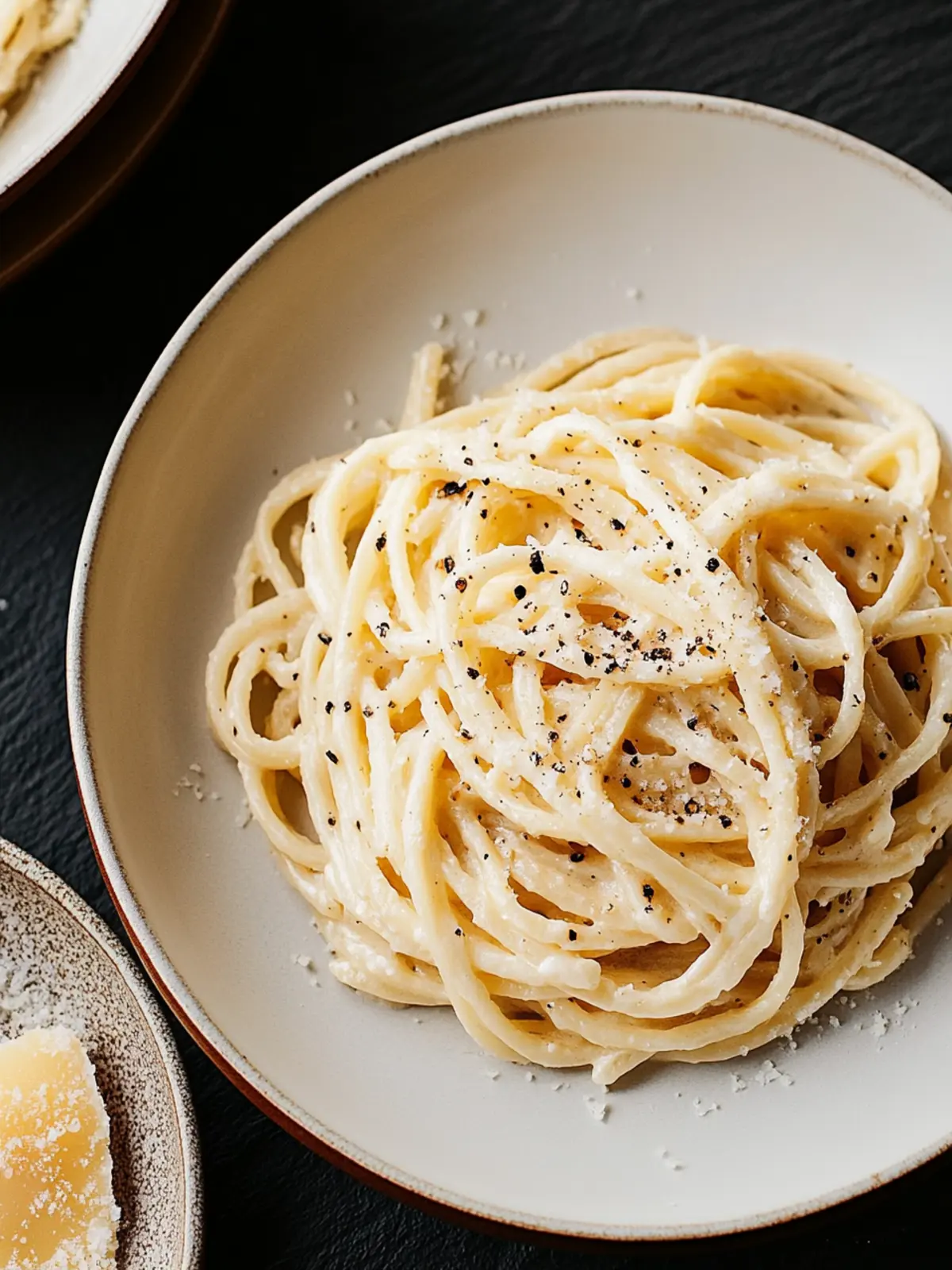
What to Serve with Cacio e Pepe?
Elevate your Cacio e Pepe experience with delightful pairings that complement its rich flavors and creamy texture.
- Crisp Green Salad: A refreshing mix of greens adds a crunchy contrast and cuts through the creaminess of the dish.
- Garlic Bread: Toasted slices brushed with garlic butter provide a satisfying crunch and are perfect for mopping up extra sauce.
- Roasted Vegetables: Roasted seasonal veggies bring an earthy flavor and a splash of color, harmonizing beautifully with the pasta’s richness.
- Fried Zucchini Fritters: Light and crispy, these fritters add a delightful crunch, enhancing the meal’s overall texture.
- Sangiovese Wine: This medium-bodied red wine pairs perfectly, its acidity balancing the creamy sauce while enhancing the meal’s flavors.
- Tiramisu: Finish your meal with this classic Italian dessert; its light, coffee-infused layers provide a smooth, sweet ending.
These pairings not only enhance Cacio e Pepe but transform a simple dinner into a memorable feast, perfect for any occasion!
Expert Tips for Cacio e Pepe
Freshly Grated Cheese: Always use whole blocks of Pecorino Romano and Grana Padano. Pre-grated varieties contain anti-caking agents that affect sauce texture.
Whole Peppercorns: Use whole black peppercorns and crack them yourself for a fresher, more vibrant flavor. This enhances the peppery bite in your Cacio e Pepe.
Pasta Water Gradually: When incorporating reserved pasta water, add it slowly. This ensures you achieve the desired sauce thickness without making it too watery.
Timing Is Key: Serve immediately after preparation for the best texture. The sauce is creamiest when freshly made, so avoid letting it sit too long.
Taste as You Go: Adjust seasoning if necessary, especially with salt. Keep in mind that cheese already adds saltiness to the dish. Enjoy your homemade Cacio e Pepe!
Storage Tips for Cacio e Pepe
Fridge: Store leftover Cacio e Pepe in an airtight container for up to 2 days. To maintain the sauce’s creamy texture, refrigerate promptly after serving.
Reheating: When ready to enjoy the leftovers, reheat gently in a skillet over low heat. Add a splash of reserved pasta water to loosen the sauce and revive its silky texture.
Freezer: Although it’s best fresh, you can freeze Cacio e Pepe for up to 1 month. Store in a freezer-safe container, but note that the texture may change slightly upon thawing.
Serving Fresh: For the ultimate experience, always try to enjoy Cacio e Pepe freshly made, as the flavors and textures are at their peak!
Make Ahead Options
These Cacio e Pepe are perfect for meal prep enthusiasts! You can easily cook the pasta and prepare the sauce up to 24 hours in advance, making weeknight dinners a breeze. Simply boil your pasta until al dente, then drain and toss it with a bit of olive oil to prevent sticking. For the sauce, mix freshly grated Pecorino Romano and Grana Padano with crushed black pepper in a bowl. When you’re ready to serve, reheat the pasta while gradually adding reserved pasta water and the cheese mixture to create that beautifully creamy texture. Just remember to store everything in airtight containers in the refrigerator for optimal freshness, and you’ll enjoy delicious, homemade Cacio e Pepe with minimal effort!
Cacio e Pepe Variations
Feel free to personalize your Cacio e Pepe with these delightful twists that enhance flavors and satisfy your cravings!
-
Parmesan Swap: Substitute Pecorino Romano with Parmesan for a nuttier flavor profile. It brings a delightful creaminess that pairs perfectly with the pasta.
-
Spicy Kick: Add a pinch of red pepper flakes to the skillet when heating the olive oil. This fiery touch elevates the dish, making it a tantalizing treat for spice lovers.
-
Nutty Flavor Boost: Toss in toasted pine nuts for an extra crunch. They not only add texture but also a wonderful depth of flavor that complements the richness.
-
Garlic Infusion: Sauté minced garlic with the olive oil and butter for an aromatic twist. Garlic’s warmth subtly enhances the overall dish without overpowering the classic flavors.
-
Creamy Addition: For extra creaminess, stir in a splash of heavy cream or a dollop of crème fraîche after adding the cheese. This will give your sauce a luxurious, velvety finish.
-
Herb Infusion: Fresh herbs like thyme or parsley can add freshness to the dish. Sprinkle them on just before serving for a pop of color and flavor.
-
Vegetable Upgrade: Toss in sautéed greens like spinach or arugula for a nutritious boost. They add vibrant color while balancing the richness of the cheese.
-
Lemon Zest: Add a sprinkle of lemon zest just before serving to brighten the flavors. The citrusy notes uplift the rich, creamy sauce, making each bite invigorating.
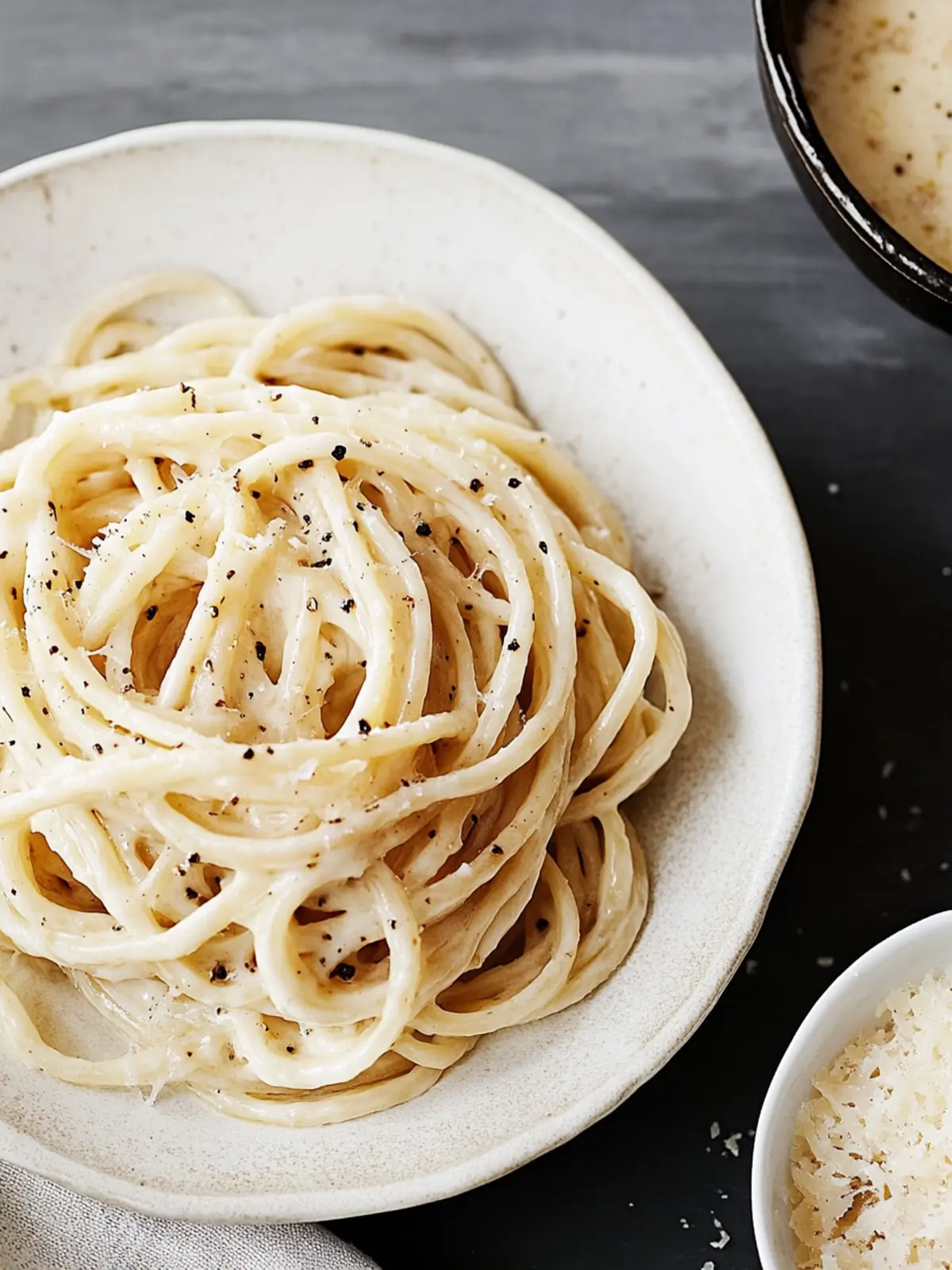
Cacio e Pepe Recipe FAQs
What is the best pasta to use for Cacio e Pepe?
When it comes to Cacio e Pepe, long pasta like tonnarelli is the traditional choice, but don’t hesitate to substitute with spaghetti, bucatini, or linguine if they suit your pantry. Each brings its unique texture and hold to the creamy sauce.
How should I store leftover Cacio e Pepe?
To keep your leftover Cacio e Pepe fresh, store it in an airtight container in the refrigerator for up to 2 days. Make sure to refrigerate promptly after serving to maintain its creamy texture.
Can I freeze Cacio e Pepe?
Yes, you can freeze Cacio e Pepe for up to 1 month! Just place it in a freezer-safe container and be aware that the texture may alter slightly upon thawing. To reheat, gently warm it in a skillet over low heat, adding a splash of reserved pasta water to revive the sauce’s creaminess.
How do I troubleshoot a watery Cacio e Pepe sauce?
If your sauce turns out watery, don’t worry! You can fix it by gradually adding more grated cheese and a pinch of freshly cracked black pepper while tossing the pasta. Alternatively, allow it to cook for a bit longer on low heat, which will help thicken the sauce. Always remember to add the reserved pasta water in moderation to achieve the perfect consistency!
Are there any dietary considerations for Cacio e Pepe?
Absolutely! Cacio e Pepe is vegetarian, but if you are concerned about lactose, you can try using lactose-free cheese alternatives. Additionally, if you have a gluten allergy, gluten-free pasta varieties (like corn or lentil-based) can be perfect substitutes for this delicious dish. Enjoy your meal without worry!
How do I choose the right cheese for Cacio e Pepe?
For the best flavor, using freshly grated Pecorino Romano is essential, as it offers a sharp and salty profile. Grana Padano complements this nicely, creating a creamy balance. If you’re in a pinch, you can use Parmesan in place of either cheese, but always opt for whole blocks to grate fresh and avoid the texture issues caused by pre-grated options.
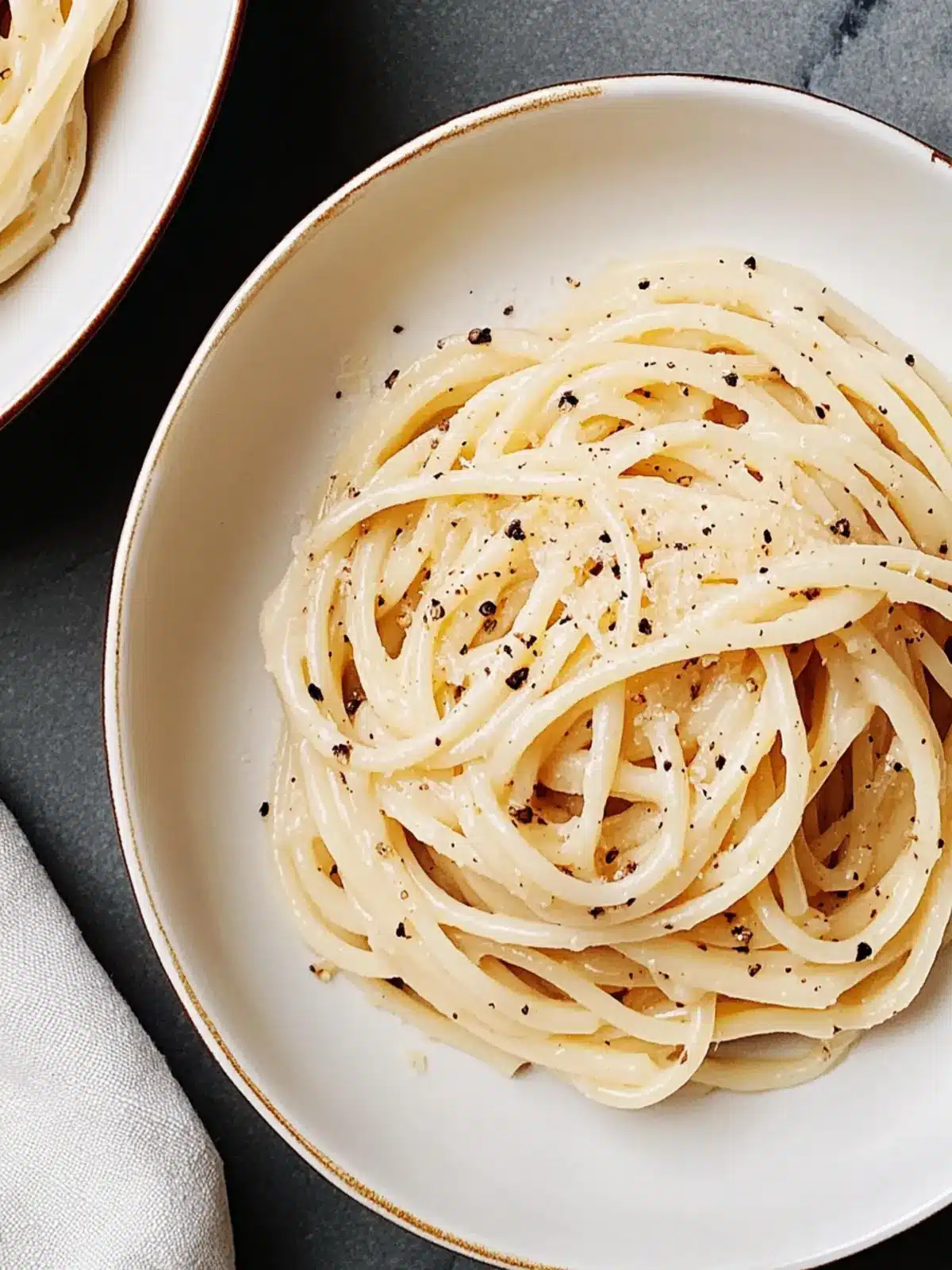
Savor Cacio e Pepe: Your Quick Guide to Italian Comfort Food
Ingredients
Equipment
Method
- Boil a large pot of salted water and add the long pasta. Cook until al dente, then reserve about a cup of pasta water before draining.
- In a spacious skillet, add a drizzle of olive oil and a pat of butter. Heat over medium, then toss in the freshly cracked black pepper and let it sizzle.
- Carefully add the drained pasta to the skillet. Toss gently to coat every strand.
- Gradually stir in the freshly grated Pecorino Romano and Grana Padano. Add reserved pasta water little by little.
- Plate up the pasta once the sauce reaches your desired consistency. Garnish with extra cheese and a sprinkle of cracked pepper.